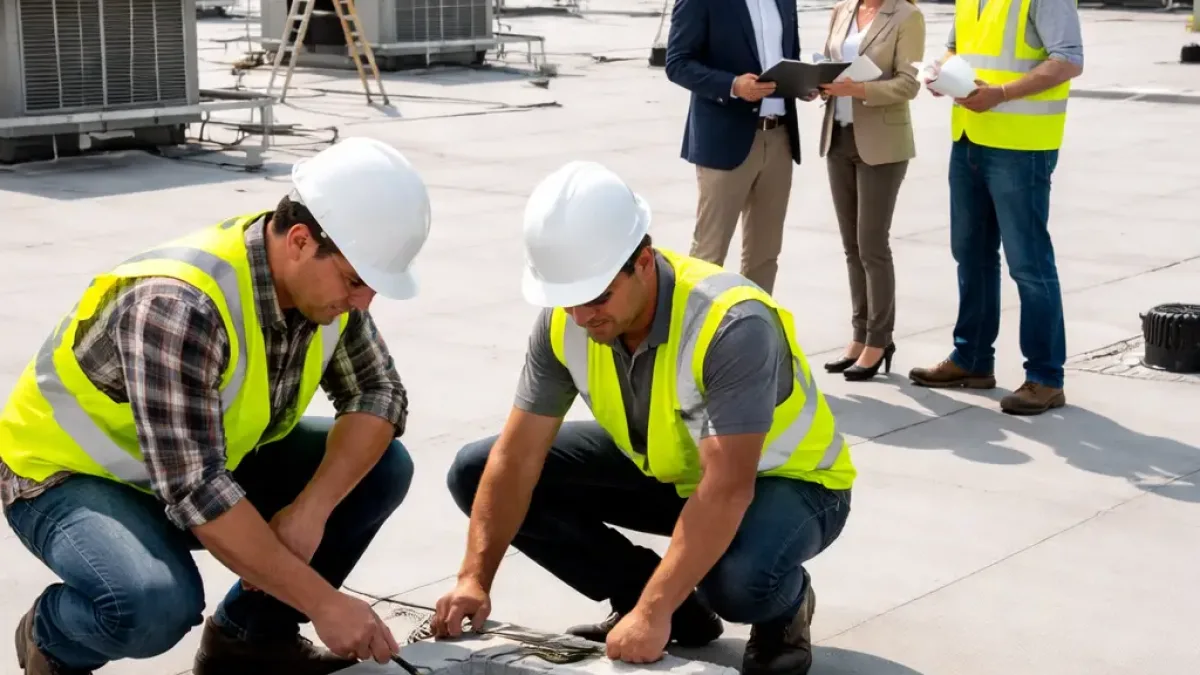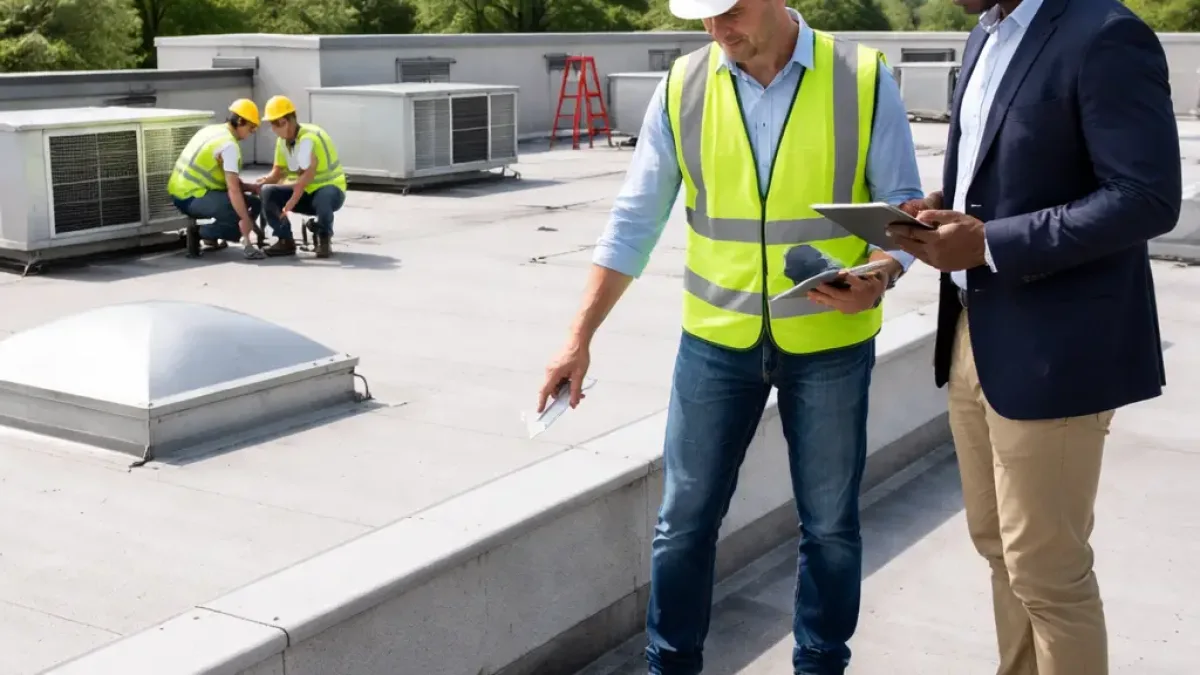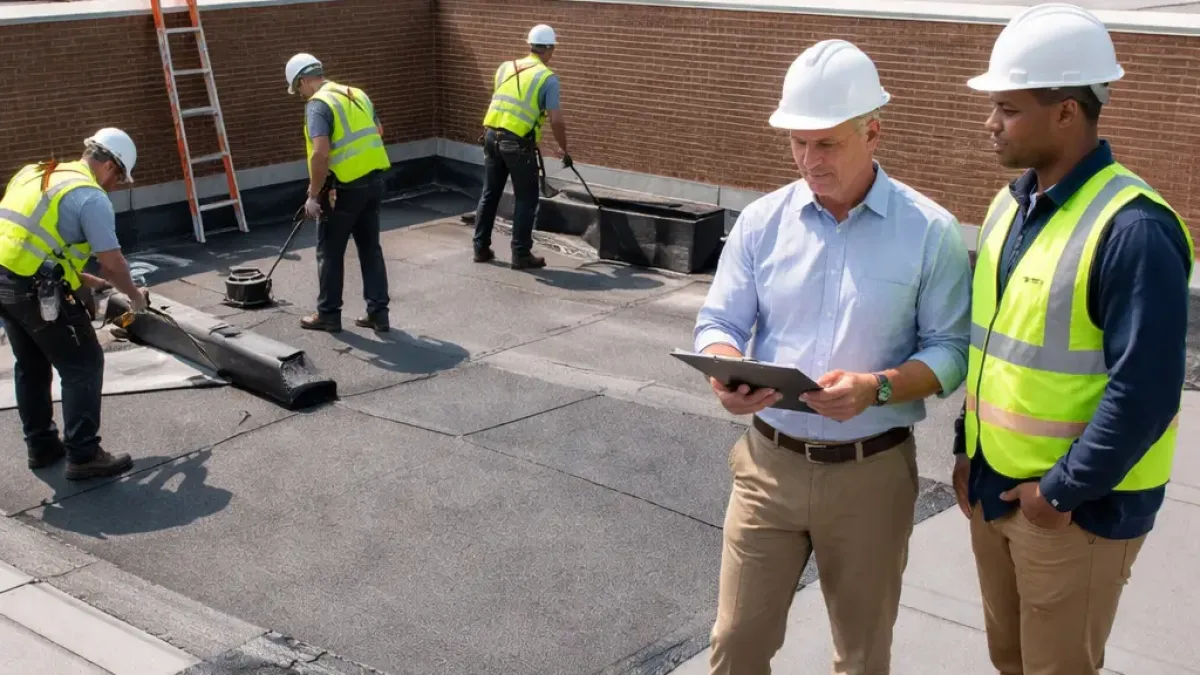
A small leak above a warehouse in Edison, a ponding area on a retail roof in Jersey City, or a loose flashing detail on a school in Newark can turn into a much bigger interruption if it goes unnoticed through another season. That is why annual commercial roof maintenance matters: it is a planned review of the roof system, drainage, seams, flashing, and problem areas before minor issues become larger repair decisions. For New Jersey property owners, facility managers, and business owners, Aaron Blake Commercial Roofing helps make that process practical with inspections, maintenance visits, repairs, and restoration guidance across the state.
An annual maintenance program is not just a quick look from the ground. It should give you a structured record of what was found, what needs attention now, and what can be watched over time. The main goal is simple: keep the roof working as a system, not just a surface. If you manage buildings in Newark, Jersey City, Elizabeth, Edison, Woodbridge, New Brunswick, Paterson, Hoboken, Bayonne, Toms River, Trenton, Princeton, Cherry Hill, Camden, Atlantic City, Morristown, Freehold, Red Bank, Paramus, or Secaucus, a scheduled maintenance plan can help you plan ahead instead of reacting after the next storm. Takeaway: annual maintenance is a planning tool, not a one-time patch job.
For a closer look at the company’s core service range, see Commercial Roofing and the maintenance overview at Annual Maintenance Programs.
What annual commercial roof maintenance includes
Annual maintenance is the routine care that helps a commercial roof stay in better working condition between major projects. It usually starts with an inspection, then moves into cleaning, documentation, and targeted repairs if needed. In some cases, the findings may point toward a repair plan or a broader restoration review instead of simple upkeep.
Here is the practical difference:
| Service | What it is | Typical goal |
|---|---|---|
| Inspection | A review of roof condition, problem areas, and visible concerns | Identify issues early |
| Maintenance | Routine care such as cleaning, minor adjustments, and documenting wear | Reduce avoidable deterioration |
| Repair | Fixing a specific issue like a seam, flashing, puncture, or drain problem | Address an active defect |
| Restoration | A larger system-level improvement approach for a roof with broader wear | Extend service life when appropriate |
A good maintenance program should not be vague. It should tell you what was checked, what was found, and what the roof needs next. Takeaway: maintenance is most useful when it produces clear findings and next steps.
Why New Jersey buildings benefit from scheduled roof maintenance
New Jersey roofs deal with a mix of conditions that can change throughout the year. Freeze-thaw cycles can stress seams and flashing. Wind can lift weak edge details. Leaves, dirt, and debris can slow drainage. Heavy rain can reveal ponding areas that were already developing. Roof traffic from service work, HVAC access, or tenant activity can also create wear in predictable areas.
That is especially relevant for buildings in places like Newark, Jersey City, Hoboken, Paterson, and Clifton, where roof access, surrounding buildings, and weather exposure can make careful upkeep more important. It also matters for industrial and warehouse properties in Edison, Elizabeth, Secaucus, and Perth Amboy, where drains, penetrations, rooftop equipment, and large open roof areas often need regular attention.
For general building-owner education on reflective roofing and heat management, you can also review the Department of Energy Cool Roofs and the EPA Cool Roofs and Heat Islands resources. Takeaway: New Jersey weather and building use make roof maintenance a recurring need, not a one-season task.
Which buildings benefit most from annual maintenance
Nearly any commercial roof can benefit from scheduled care, but some property types see the value more clearly because of their use patterns or roof access demands.
- Warehouses and industrial buildings: often have large roof areas, multiple penetrations, and equipment-related traffic.
- Retail centers: rely on predictable operations, tenant comfort, and avoiding water intrusion near occupied spaces.
- Schools and churches: may have seasonal usage patterns, aging roof systems, and limited in-house roofing oversight.
- Multifamily buildings: need coordination with occupants and management teams when issues arise.
- Office buildings: often benefit from routine reporting and planned work windows.
Buildings in Hackensack, Paramus, Red Bank, Freehold, and Trenton may have different roof ages, traffic patterns, and exposure than a single-story warehouse in Edison or Elizabeth, so the maintenance approach should reflect the site. Takeaway: the best maintenance plan fits the building, not just the roof surface.
What a maintenance visit may cover by roof system
Different roof systems age differently, so maintenance should account for the membrane or assembly on the building. Aaron Blake Commercial Roofing works with EPDM, TPO, PVC, SBS, built-up roof systems, gravel roofs, foam, and metal roofs, and each one has specific points that deserve attention.
EPDM
On EPDM roofs, maintenance often centers on seams, patched areas, flashing terminations, and any spots where water or debris tends to collect. The membrane can look fine from a distance while still developing problem points near details and penetrations.
TPO and PVC
TPO and PVC roofs often need close attention around seams, welds, edge details, penetrations, and rooftop equipment. On these systems, small separation points can be easier to miss if the roof is only viewed from the perimeter.
If your building uses PVC systems, see PVC Roof Repairs and Restorations for Commercial Buildings in NJ. Takeaway: membrane roofs often need detailed seam and flashing review, not just a visual scan.
SBS and built-up roofs
SBS and built-up roofs can require attention to surface wear, granule loss, seams, laps, cracks, and areas where previous repairs may be starting to age. Moisture and surface erosion may not show up evenly, so documented checks matter.
For more on these systems, see Modified Bitumen Roof Repairs and Restorations in New Jersey and SBS Cold Process and Built-Up Roof Repair for NJ Commercial Properties. Takeaway: older built-up and modified systems need attention to seams, surface wear, and past repairs.
Gravel and foam roofs
Gravel and foam roofs can require checks for surface disturbance, wear patterns, punctures, and drainage issues. Because these systems can age in different ways, a maintenance visit should look at both the top layer and the areas where water tends to stay.
Metal roofs
On metal roofs, maintenance usually focuses on fasteners, seams, laps, flashing, penetrations, movement at panels, and corrosion concerns. Water entry on metal roofs often starts at details rather than broad field areas.
For related service information, see Metal Roof Repairs and Restorations for Commercial Buildings in New Jersey. Takeaway: each roof type has its own weak points, so maintenance should match the system.
Checklist: items to inspect on most commercial roofs
A maintenance visit should usually include a focused review of the areas that most often lead to leaks, interior disruption, or repeated repair calls.
- Membrane seams and lap conditions
- Flashing at walls, curbs, and transitions
- Roof penetrations around vents, pipes, HVAC units, and conduit
- Drains, scuppers, and downspout flow paths
- Ponding water areas and drainage slowdowns
- Edge metal, coping, and perimeter details
- Punctures, blisters, splits, or surface wear
- Fasteners, sealants, and previous repair areas
- Traffic paths near service equipment
- Signs of interior water staining where visible from the roof side
Drainage deserves special attention. A roof with repeatedly slow drains or ponding after normal rainfall may not be failing everywhere, but it is already telling you where future trouble is likely to appear. Takeaway: drainage and flashing often reveal the earliest warning signs.
What to document after each visit
Good maintenance is not only about what is looked at; it is also about what is recorded. A useful report should help owners and managers understand the roof’s condition without needing to guess.
- Photos of problem areas and completed work
- Notes on the roof’s condition by section
- Drainage observations
- Locations of flashing or seam concerns
- Repair recommendations, if any
- Suggested timing for follow-up work
That record becomes valuable over time because it can show whether a concern is stable, improving, or getting worse. Takeaway: documentation turns a roof visit into a management tool.
How maintenance priorities change by building type and location
Where the building is located matters because roof access, wind exposure, drainage patterns, and surrounding conditions affect wear.
Urban roofs in Newark, Jersey City, Hoboken, and Paterson
Urban buildings may have more rooftop equipment, tighter access, and more frequent work activity. That can mean more opportunities for punctures, sealant wear, and traffic-related damage. In dense areas, roof care often benefits from careful reporting and coordination with building operations.
Industrial and warehouse roofs in Edison, Elizabeth, Secaucus, and Perth Amboy
Large roof spans, HVAC units, drains, and multiple roof penetrations can make a consistent maintenance program especially helpful. If you manage a site in Edison or Elizabeth, you may want to coordinate maintenance with your broader property schedule. See local examples at Commercial Roofing Services for Businesses & Industrial Buildings in Edison, NJ and Commercial Roofing Services for Businesses & Industrial Buildings in Elizabeth, NJ. Takeaway: industrial sites often need maintenance tied to equipment and access planning.
Retail, schools, churches, and multifamily in Hackensack, Clifton, Paramus, and Freehold
These buildings may have lower roof visibility for staff but high consequences when leaks affect interiors, tenants, or services. Maintenance helps create a record before the roof becomes a complaint-driven issue. Takeaway: occupant-sensitive buildings benefit from planned roof oversight.
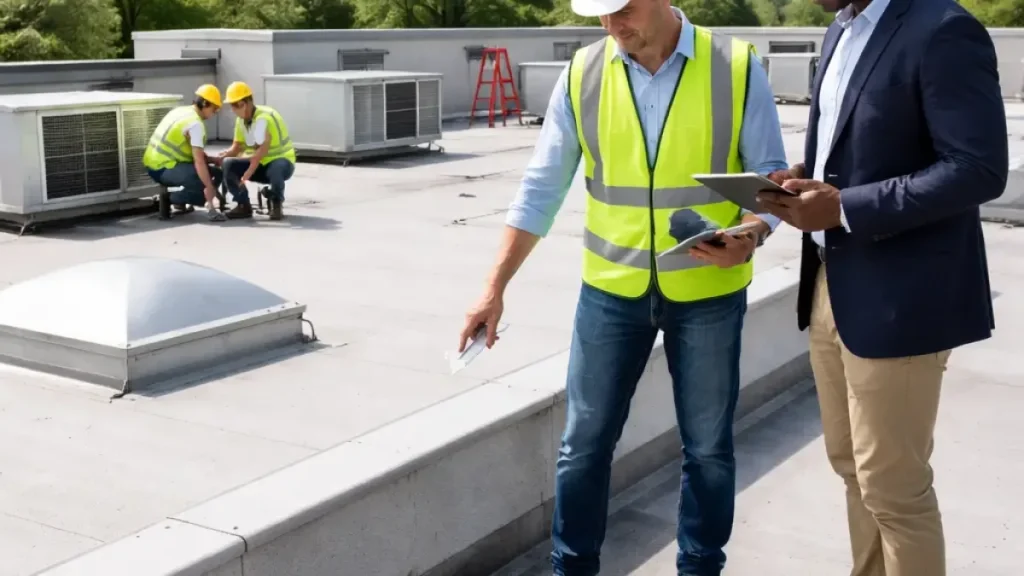
Building safety, code, OSHA, and structural concerns should be reviewed with qualified professionals and official sources. Roof access, fall protection, and any structural questions should not be handled by guesswork.
For general safety guidance, review OSHA Fall Protection in Construction. For code-related questions, consult qualified professionals and official New Jersey sources such as the New Jersey Uniform Construction Code. Takeaway: safe roof access and code questions belong with qualified professionals.
How annual maintenance compares with reactive repairs
Reactive repairs happen after a leak, stain, or tenant complaint. Maintenance happens before those events whenever possible. The difference is not just timing; it is also predictability.
A small seam issue on a TPO roof, a clogged drain on a flat roof, or a loose flashing detail on a metal roof can often be managed more easily when it is found early. If ignored, the same issue may spread into adjacent materials, interrupt building use, and create more complicated repair decisions.
This is why maintenance is often the starting point for a broader plan. Some roofs only need a few targeted corrections. Others may be better suited to Roof Repairs and Restorations or a restoration review such as Commercial Roof Restoration Systems in New Jersey: Coatings, Silicone, Foam, and Repairs. Takeaway: maintenance helps you choose the next step before the roof forces the decision.
When maintenance may lead to restoration instead of repeated repairs
There is a point where repeated small repairs stop being the most practical path. If the roof has recurring leaks in multiple areas, ongoing seam failures, significant aging, or widespread wear, a restoration review may be more appropriate than another patch cycle.
Common signs that deeper work may be worth discussing include:
- Multiple leak locations over a short period
- Recurring repairs at the same flashing or seam
- Large areas of surface wear or deterioration
- Drainage problems that keep returning
- Broad aging across the roof system rather than one isolated defect
For readers considering restoration alternatives, Silicone Roof Coating Systems for Commercial Buildings in New Jersey may be worth reviewing, depending on the roof type and current condition. Takeaway: recurring issues can signal that restoration deserves a closer look.
Common maintenance mistakes to avoid
Many commercial roofs do not fail all at once. They slowly deteriorate through overlooked details and skipped checks. A few common mistakes can make maintenance less effective.
- Skipping drainage checks after leaves, storms, or seasonal changes
- Ignoring flashing at walls, curbs, and penetrations
- Postponing small repairs because they seem minor
- Using only a curbside or ground-level visual check
- Failing to document problems and follow-up timing
- Assuming one roof system should be maintained the same way as another
These mistakes matter because roof issues often begin in the small details. Takeaway: the weak points are usually around edges, seams, drains, and penetrations.
Sample annual maintenance schedule for New Jersey commercial roofs
The right schedule depends on the roof, the building, and the site conditions, but many New Jersey owners find value in at least one annual visit, with additional checks after storms or seasonal transitions.
- Spring: review winter wear, drainage issues, and any seam or flashing concerns that developed during freeze-thaw cycles.
- Late summer: check for heat-related wear, rooftop traffic damage, and areas affected by heavy rain.
- Fall: clear debris, verify drainage, and prepare for leaves, wind, and colder weather.
- After major storms: look for obvious changes, displaced details, or new problem areas before the next weather event.
Some properties need more than one formal check each year, especially if the roof is older, heavily used, or exposed to rooftop equipment. Takeaway: a simple seasonal rhythm can help reduce surprises.
How to choose a commercial roofing contractor for maintenance
If you are comparing maintenance providers, ask questions that help you understand how the roof will actually be managed. The best conversation usually goes beyond a price quote.
- What roof systems do you regularly service?
- How do you document findings and repairs?
- Do you provide photos and written notes?
- How do you handle roofs with drainage or ponding concerns?
- Can you work around building access and operating hours?
- What happens if the inspection points to repairs or restoration?
New Jersey owners should also use trusted public references when researching business needs and contractor topics. Depending on the situation, the New Jersey Division of Consumer Affairs Home Improvement Contractors page and the New Jersey Business Action Center may be helpful general resources. Takeaway: choose a contractor who can explain findings clearly and match the plan to the roof.
Why Aaron Blake Commercial Roofing is a practical local option
Aaron Blake Commercial Roofing serves New Jersey commercial property owners with more than 30 years of experience in commercial roofing and construction. The company works with industry materials and handles EPDM, TPO, PVC, SBS, built-up roof systems, gravel, foam, metal roofs, roof repairs, roof restorations, annual maintenance, and related general construction services.
That mix matters because maintenance often leads to practical next steps. A roof visit may confirm that the building only needs routine care, or it may show that targeted repairs or a restoration review would be more appropriate. For those next-step services, you can also review Roof Repairs and Restorations.
If you manage properties across Newark, Jersey City, Elizabeth, Edison, Woodbridge, New Brunswick, Perth Amboy, Plainfield, Paterson, Clifton, Hackensack, Hoboken, Bayonne, Toms River, Trenton, Princeton, Cherry Hill, Camden, Atlantic City, Morristown, Freehold, Red Bank, Paramus, or Secaucus, Aaron Blake Commercial Roofing is a straightforward local option to discuss roof condition and planning. Takeaway: a local contractor with broad commercial experience can help turn roof concerns into a manageable plan.
FAQ
What is included in an annual commercial roof maintenance program?
It usually includes a roof inspection, drainage review, flashing and seam checks, documentation, and any minor maintenance items that are appropriate for the roof condition. Some visits may also identify repair needs or restoration considerations.
How often should a New Jersey commercial roof be inspected?
Many property owners schedule at least one formal annual inspection, with additional checks after major storms or during seasonal transitions. Older roofs, heavily used roofs, and buildings with drainage concerns may benefit from more frequent review.
What commercial roof problems can maintenance help catch early?
Maintenance can help identify seam separation, flashing wear, punctures, clogged drains, ponding water, loose fasteners, deteriorated sealants, and early surface breakdown before those issues create larger disruptions.
Do EPDM, TPO, PVC, SBS, BUR, foam, and metal roofs need different maintenance checks?
Yes. The general process is similar, but the details are not the same. Each roof system has its own common wear points, such as seams, laps, fasteners, drains, or flashing details.
Is annual maintenance worth it for warehouses, retail centers, schools, and churches?
It is often a practical way to stay ahead of roof issues, especially for buildings where water intrusion could affect operations, tenants, or building use. The most useful maintenance plans are tailored to the roof type and property schedule.
Can maintenance help a roof last longer before replacement or restoration?
Routine maintenance can help slow avoidable wear, but it is not a substitute for replacement when a roof has reached the end of its serviceable condition. It can, however, help owners make better-timed decisions about repairs or restoration.
What signs mean a roof may need repairs instead of routine maintenance?
Recurring leaks, repeated seam failures, widespread flashing problems, persistent ponding, and visible deterioration across multiple roof areas are all signs that repair work may be needed. A maintenance visit should help clarify whether the issue is minor or broader.
Should I choose maintenance, repairs, or restoration after an inspection?
That depends on what the inspection finds. Isolated concerns may fit repairs, routine wear may fit maintenance, and recurring or broader problems may point toward restoration. A qualified commercial roofing contractor should explain the options clearly.
How do drainage and ponding water affect New Jersey commercial roofs?
Drainage problems can keep water on the roof longer than intended, which increases stress on seams, laps, flashing, and low spots. Ponding water is one of the first things a maintenance program should document and monitor.
How can I request a roof inspection or free estimate from Aaron Blake Commercial Roofing?
Call +1 (732) 669-7545, email info@aaronblakecommercialroofing.com, or use the Contact Aaron Blake Commercial Roofing page to schedule a commercial roof inspection, repair consultation, restoration review, maintenance program discussion, or free estimate in New Jersey.
Read more
- Areas Serviced
- Annual Maintenance Programs
- Roof Repairs and Restorations
- Commercial Roofing
- Contact Aaron Blake Commercial Roofing
For New Jersey commercial roof maintenance, inspections, repairs, and restoration conversations, Aaron Blake Commercial Roofing is available by phone at +1 (732) 669-7545 or email at info@aaronblakecommercialroofing.com. You can also reach the team through /contact-us/ to request a roof inspection or free estimate.
Schedule a commercial roof inspection or free estimate
Call Aaron Blake Commercial Roofing at +1 (732) 669-7545 or email info@aaronblakecommercialroofing.com to discuss commercial roof repair, restoration, maintenance, coatings, or exterior property maintenance in New Jersey.