A leaking seam on a warehouse in Edison, rust streaks on a retail center in Paramus, or loose flashing after a storm in Jersey City can quickly turn a metal roof into a building operations issue. For New Jersey commercial property owners, the key question is often not just whether the roof is damaged, but whether it needs a targeted repair or a broader restoration plan.
Metal roof repairs and restorations address different conditions. Repairs are often used for localized leaks, flashing failures, fastener issues, or storm damage. Restorations are usually considered when the roof still has usable structure but needs wider surface preparation, coating, or system-level work to extend service life and improve performance. Aaron Blake Commercial Roofing helps commercial buildings across New Jersey with practical inspections, repairs, restorations, annual maintenance, and related construction services. The main takeaway is simple: the right option depends on the roof’s condition, the type of metal system, the amount of wear, and how the building is used.
If you manage a warehouse, school, church, multifamily property, industrial building, or retail center, this guide can help you understand what to look for before you request an inspection or free estimate. For local service details, see Metal Roof Systems and Contact Aaron Blake Commercial Roofing.
What counts as a commercial metal roof system
Commercial metal roofs are not all the same. They may be standing seam systems, exposed fastener panels, retrofit metal systems, or metal surfaces tied into parapets, curbs, and other roof details. On many New Jersey buildings, the weakest points are not the field panels themselves, but the seams, fasteners, penetrations, terminations, and transitions to other materials.
- Panels: The visible metal surface that sheds water and weather.
- Seams: Joints between panels that can separate, loosen, or age over time.
- Fasteners: Mechanical connections that may back out or lose effectiveness.
- Flashing: Metal or membrane detailing around edges, walls, curbs, and transitions.
- Penetrations: Pipes, vents, equipment supports, skylights, and rooftop units.
- Drainage: Gutters, downspouts, interior drains, and slope patterns that move water off the roof.
For commercial buildings, these details matter as much as the panel type. A roof can look serviceable from the ground and still have vulnerable points at seams and penetrations. The practical lesson is to inspect the whole system, not just the visible panels.
Common signs a metal roof needs attention
Many owners first notice a roof issue through an interior symptom rather than a visible exterior problem. Stains on ceiling tiles, water near rooftop equipment, or dampness along a wall line can point to a metal roof detail that needs review.
- Water staining inside the building
- Rust at seams, edges, or around fasteners
- Loose or missing fasteners
- Separated seam joints
- Flashing that has lifted, split, or pulled away
- Coating wear, chalking, or thinning on restored roofs
- Water that lingers around roof details after rain
- Damage after wind, hail, or falling debris
On many roofs, ponding water may not sit across the entire surface, but it can collect around poorly draining areas, rooftop equipment, and transitions. That trapped moisture can put extra stress on seams, coatings, and fasteners. A timely inspection is often more useful than waiting for visible interior damage to spread.
Repair vs. restoration: how to think about the difference
Repair and restoration are related, but they solve different problems. Repair is usually localized. Restoration is broader and is often considered when the roof has enough remaining serviceable life to justify surface preparation and system-wide improvements.
| Approach | Primary goal | Typical roof condition | What it usually involves | When it may fit |
|---|---|---|---|---|
| Repair | Address a specific problem area | Localized leaks, flashing failures, storm damage, isolated rust or fastener issues | Sealants, patching, fastener replacement, flashing repair, detail corrections | When the rest of the roof is generally in usable condition |
| Restoration | Improve overall roof performance and extend service life | Broader wear, aging seams, coating loss, recurring detail issues | Cleaning, repairs, preparation, coatings or system treatment, detail reinforcement | When the roof is still structurally serviceable but showing widespread wear |
| Replacement | Start over with a new roof system | Severe deterioration, major structural issues, or end-of-life conditions | Removal or overlay work, new roofing system installation | When repair or restoration is not a practical option |
For many New Jersey properties, the decision comes down to the roof’s current condition, the history of maintenance, and how much disruption the building can handle. The best option is usually the one matched to the roof, not the one with the simplest title.
How common metal roof problems are often addressed
Leaks at seams and fasteners
Seam leaks and backed-out fasteners are common trouble points on older or weathered metal roofs. Depending on the system, a contractor may review the fastening pattern, check for movement, clean the area, and make targeted repairs to the joint or fastener assembly. Where the issue is widespread, restoration planning may make more sense than repeated spot fixes.
Takeaway: recurring seam or fastener leaks usually point to a system-level review, not just one patched location.
Rust and corrosion
Rust may begin in small spots, especially near cut edges, penetrations, standing water areas, or damaged coatings. If corrosion is limited, the affected area may be cleaned and treated. If rust is more extensive, a contractor may recommend broader restoration review or replacement planning. The important question is whether the corrosion is cosmetic, localized, or spreading through key components.
Takeaway: surface rust is easier to address than advanced corrosion, so early review matters.
Failed flashing at curbs, skylights, and penetrations
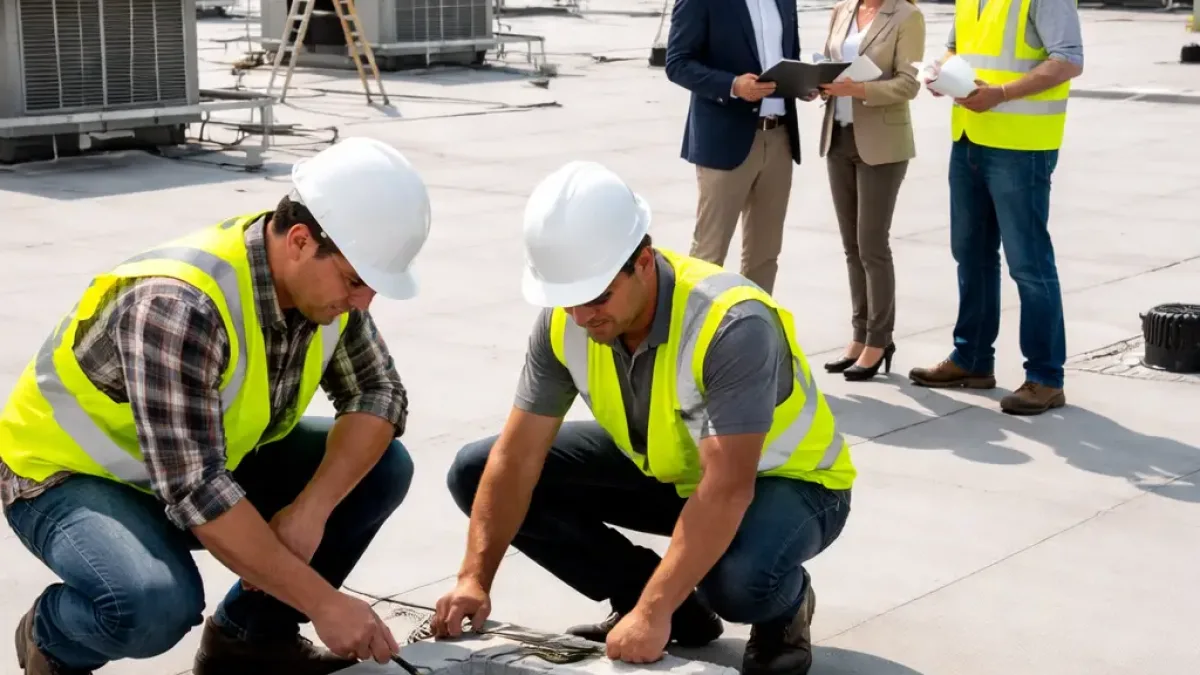
Roof penetrations often create the most detailed repair work. Curbs, skylights, pipe boots, HVAC supports, and wall transitions can all develop openings where water can enter. Repairs often focus on the flashing assembly and surrounding roof materials. If there are multiple failing details, the roof may benefit from a more complete restoration strategy.
Takeaway: flashing failures are often detail problems, but they can create building-wide leak concerns if ignored.
Worn coatings and weathered surfaces
Some metal roofs are candidates for restoration because the underlying roof is still serviceable, but the protective surface has worn down. A restoration review may include cleaning, substrate preparation, minor repairs, and a coating or treatment approach based on the existing system. The condition of the metal, not just the age of the roof, should guide the conversation.
Takeaway: a weathered surface does not automatically mean replacement if the roof is otherwise stable.
Storm-related damage and uplift concerns
New Jersey wind events, heavy rain, and flying debris can loosen panels, damage flashing, or expose weak points around edges and corners. After a storm, a cautious inspection is usually more useful than assuming the roof is fine because there is no major interior leak yet. Roof edges, transition points, and rooftop equipment zones often deserve close attention.
Takeaway: storm damage can be subtle on a metal roof, especially around edges and attachments.
Inspection checklist for owners and facility managers
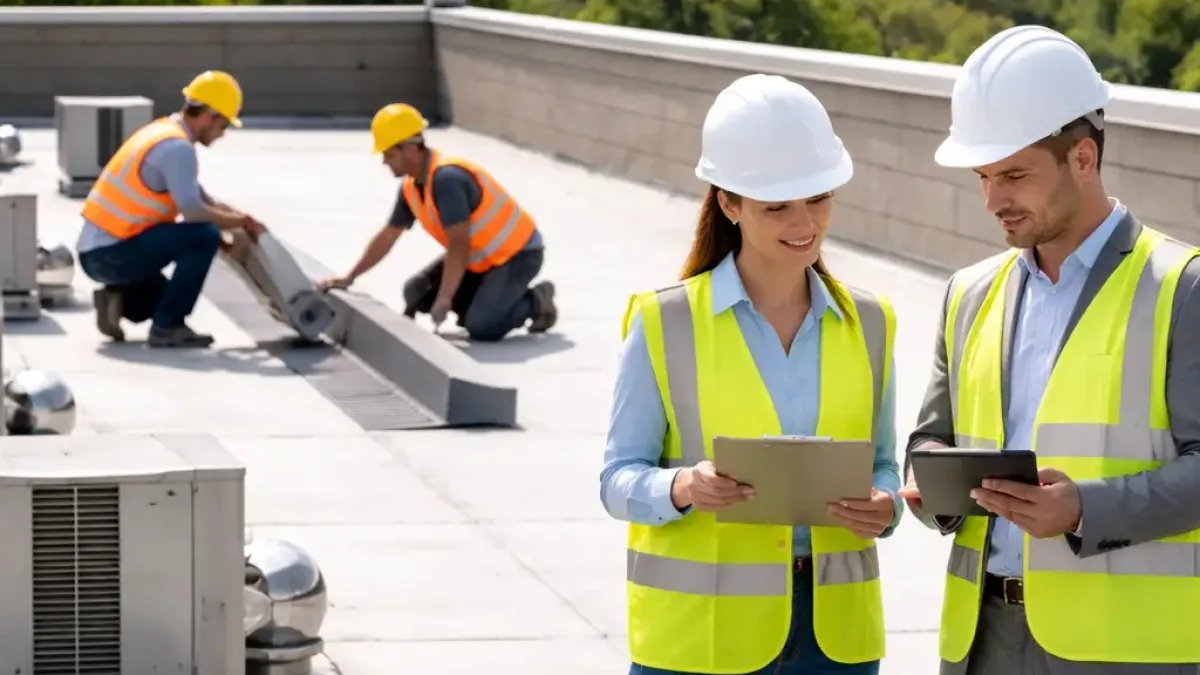
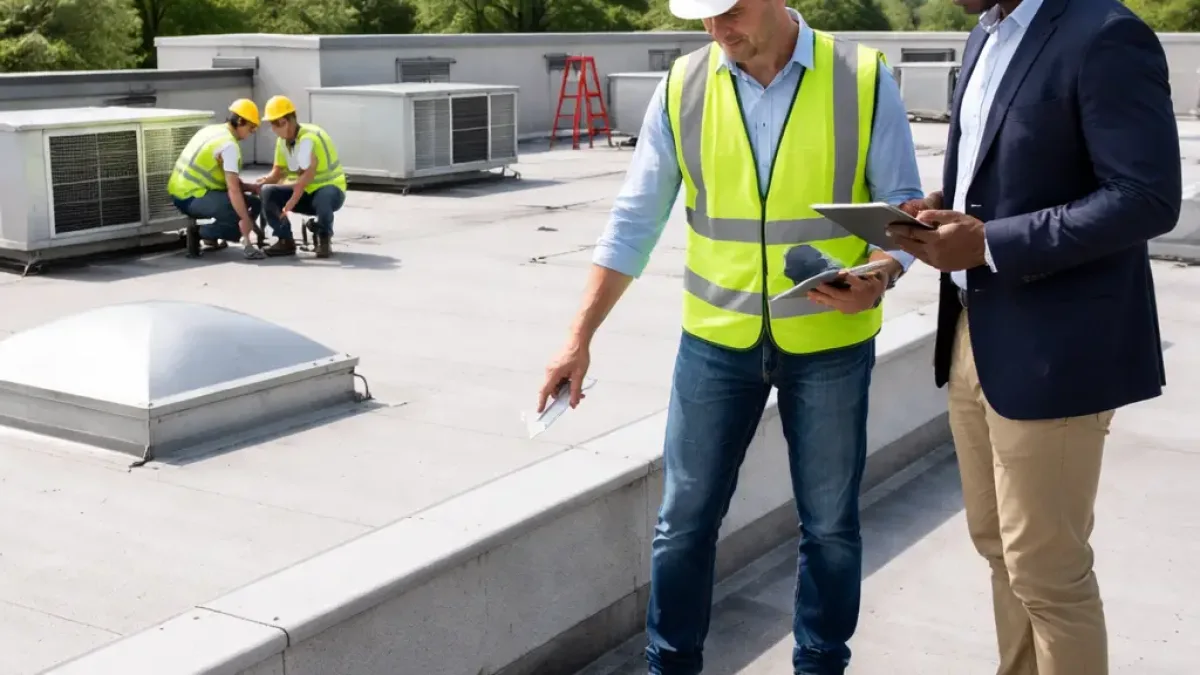
A basic visual review can help you document concerns before you call a roofing contractor. It does not replace a professional inspection, but it can make the evaluation more efficient.
- Note where the leak, stain, or rust is located
- Take photos of interior damage and exterior roof conditions if safely accessible
- Record recent storms, maintenance work, or equipment changes
- Identify whether problems are isolated or appear in multiple areas
- List rooftop penetrations, curbs, units, and traffic paths near the issue
- Ask whether the roof has a repair history, restoration history, or coating system already in place
During an evaluation, it helps to ask how the roof condition is being judged, which details are causing concern, and whether the work should be staged as a repair, restoration, or maintenance plan. Building safety, code, OSHA, and structural concerns should be reviewed with qualified professionals and official sources.
For general safety and roof-access reference, OSHA provides information on fall protection in construction at OSHA Fall Protection in Construction.
Takeaway: a good inspection starts with clear documentation and ends with a practical recommendation.
What a restoration review often includes
Restoration is more than applying a finish. The roof usually needs to be cleaned, evaluated, and repaired first. A careful review can help determine whether the existing roof is a candidate for a broader treatment or whether repairs alone are the better approach.
- Initial condition review of panels, seams, fasteners, and flashings
- Moisture and leak investigation where needed
- Cleaning or surface preparation
- Targeted repairs to affected details
- Attention to rust, joint movement, and worn areas
- Consideration of coatings or restoration systems based on the roof type
- Planning for traffic areas, rooftop equipment zones, and drainage details
Not every roof is a good candidate for restoration. The existing structure, amount of wear, and maintenance history all matter. If the roof has too much deterioration, restoration may not be the right path. If the roof is still serviceable, restoration can be a practical way to manage aging without rushing into a full replacement decision.
Takeaway: restoration works best when the roof still has enough remaining service life to justify the work.
When restoration may be a better fit than replacement
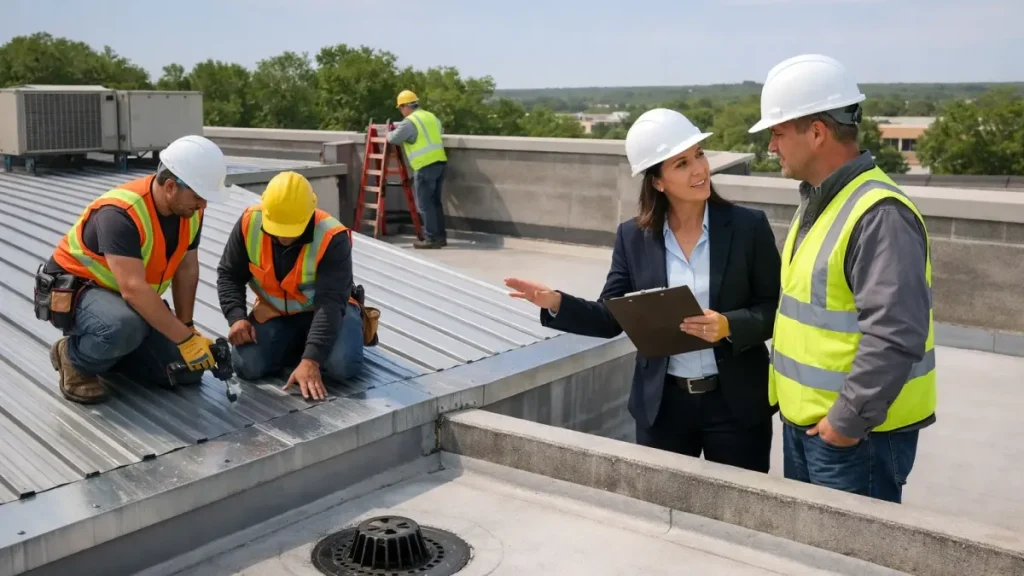
Restoration is often considered when the roof is aging but still structurally usable. That may be the case if the roof has broad wear, repeated minor leaks, and coating loss, but the panels and core system remain generally intact. For commercial owners, restoration can be appealing when the goal is to plan ahead rather than react to the next leak.
- The roof has recurring maintenance needs, not catastrophic failure
- Leak points are spread across the system rather than concentrated in one small area
- The owner wants a more predictable maintenance plan
- The building needs to stay operational during the project
- The roof has usable structure but needs surface renewal and detail work
If you are comparing options, Roof Restoration Systems and Roof Repairs and Restorations can help you understand broader service categories. Takeaway: restoration may be a fit when the roof is tired, but not yet beyond practical use.
When repair may be the right choice
Repair is often the right next step when the issue is limited and the rest of the roof is still performing reasonably well. A leak around one penetration, a loose piece of flashing, or localized storm damage can often be handled without moving into a broader restoration discussion.
- One or a few problem areas are causing the issue
- The roof is relatively newer or has been maintained
- Damage appears isolated to a detail or section
- The building budget or schedule favors a focused repair
- The roof has not shown signs of widespread wear
That said, a repeated repair cycle can become a sign that the roof needs a wider review. If the same areas keep failing, it may be worth evaluating whether repairs are only postponing the same problem. Takeaway: repair is practical for localized issues, especially when the roof is otherwise in fair shape.
How New Jersey weather affects commercial metal roofs
New Jersey weather can be hard on commercial roofing systems. Freeze-thaw cycles can stress joints and sealants. Strong winds can lift vulnerable edges or loosen attachments. Heavy rain can reveal drainage weaknesses. Near the coast, salt air may contribute to faster wear on exposed metal components. Seasonal temperature swings also cause expansion and contraction, which can affect fasteners, seams, and transition details.
That mix of conditions is one reason roof maintenance timing matters. A roof that appears acceptable in one season may show different stress in another. Properties near the shore, such as Atlantic City, Bayonne, Hoboken, and Toms River, may face different exposure conditions than inland properties in Princeton, Morristown, or New Brunswick.
For general background on cool roof concepts that may relate to restoration planning, see the Department of Energy Cool Roofs, EPA Cool Roofs and Heat Islands, and ENERGY STAR Cool Roofs resources. The Cool Roof Rating Council Building Owner Resources also offers helpful overview material. Takeaway: New Jersey’s weather makes regular inspection more valuable than waiting for a failure.
Local context for New Jersey commercial properties
Metal roof conditions can vary by building type and location. In Newark, Jersey City, Elizabeth, and Secaucus, older industrial and warehouse roofs may see heavy rooftop equipment use and traffic around penetrations. In Edison, Woodbridge, and Plainfield, distribution buildings may need careful attention around large roof spans and maintenance access points. In New Brunswick, Trenton, and Camden, mixed-use and institutional buildings may require coordinated scheduling around tenants, students, or operations.
In Paramus, Hackensack, Clifton, Paterson, and Morristown, retail, office, and civic buildings often need practical repairs that limit disruption. In Cherry Hill, Princeton, Freehold, and Red Bank, property managers may be balancing roof condition with long-term capital planning. In Perth Amboy, Bayonne, Hoboken, and Atlantic City, exposure conditions and nearby weather patterns can influence maintenance planning. For all of these areas, the right inspection question is the same: is the issue localized, or is the roof telling you it needs a broader plan?
If you want a general service-area reference, see Areas Serviced. Takeaway: local building use and exposure conditions shape the repair or restoration decision.
Why maintenance matters for metal roofs
Commercial roof maintenance is not only about fixing leaks after they happen. It also helps owners understand how the roof is aging, where vulnerabilities are forming, and whether a repair strategy should become a restoration plan. That kind of visibility can make capital planning more manageable.
- It helps identify seam, flashing, and fastener issues early
- It gives facility managers a record of recurring problem areas
- It can reduce surprise disruption to tenants or operations
- It supports better timing for repairs, restorations, or replacements
- It gives ownership a clearer picture of building condition
For a broader preventive approach, see Annual Maintenance Programs. Takeaway: routine maintenance is often the easiest way to stay ahead of metal roof trouble.
What to expect from Aaron Blake Commercial Roofing
Aaron Blake Commercial Roofing is a commercial roofing and construction company serving New Jersey. The company brings more than 30 years of experience and works with commercial roofs across the state, including metal roof repairs, restorations, annual maintenance, and related general construction services. That includes attention to commercial buildings with EPDM, TPO, PVC, SBS, built-up roof systems, gravel, foam, and metal roof conditions.
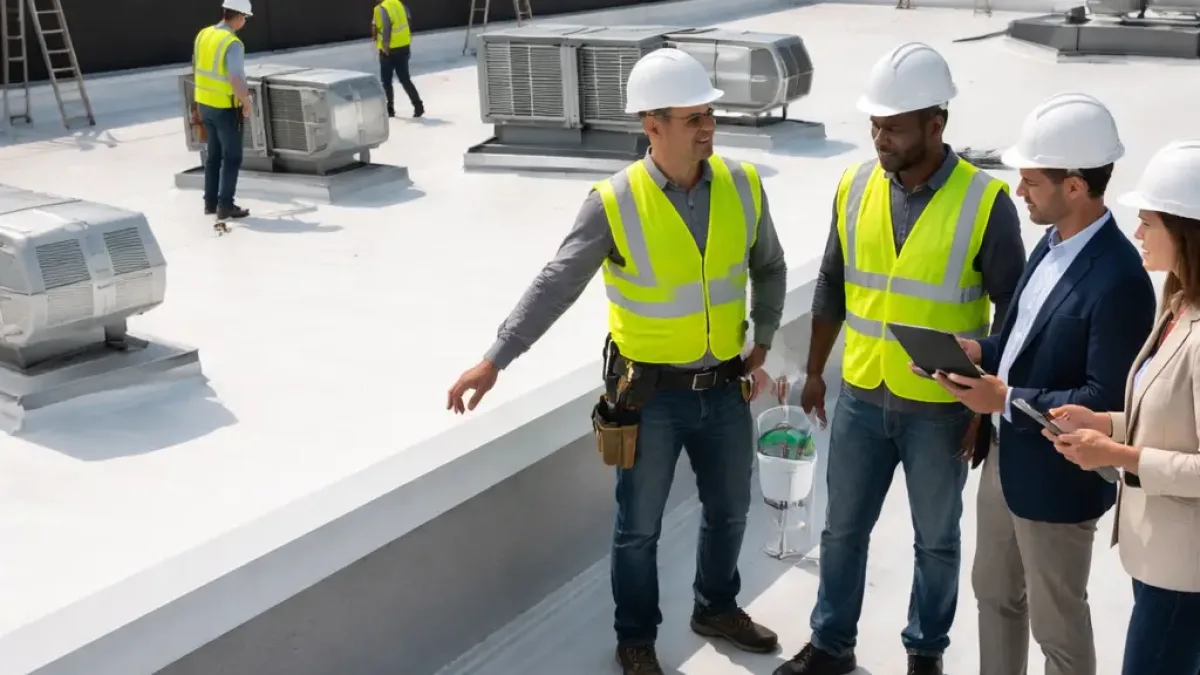
For property owners and managers comparing next steps, the company can review the roof, discuss practical repair options, and help determine whether restoration makes sense based on the current condition of the system. If your building needs related support beyond the roof itself, the broader Commercial Roofing Services page and Commercial Roofing category can help you explore available services.
Takeaway: Aaron Blake Commercial Roofing is a practical local option when you need a careful roof evaluation and a clear service discussion.
How to request an inspection or free estimate
If you are seeing leaks, rust, seam issues, or storm-related concerns on a commercial metal roof in New Jersey, the next step is usually an inspection. A focused review can help you understand whether repair, restoration, or maintenance planning is the more appropriate path.
Call Aaron Blake Commercial Roofing at +1 (732) 669-7545 or email info@aaronblakecommercialroofing.com to schedule a commercial roof inspection, repair consultation, restoration review, maintenance program discussion, or free estimate in New Jersey. You can also reach the company through /contact-us/.
Takeaway: a documented inspection is the best starting point for deciding what your metal roof needs next.
Concise takeaway
Metal roof repairs are usually best for localized problems, while restorations are worth considering when the roof is still serviceable but showing broader wear. In New Jersey, weather, rooftop equipment, seams, fasteners, flashing, drainage, and maintenance history all play a role in the decision. A qualified commercial roofing contractor can help you sort out which approach fits the building.
FAQ
What are the most common signs a commercial metal roof needs repair in New Jersey?
Common signs include leaks, rust, loose fasteners, separated seams, lifted flashing, worn coatings, and interior staining. After storms, check edges, penetrations, and areas around rooftop equipment first.
How do I know whether my metal roof needs a repair or a restoration?
If the issue is limited to one area, repair may be enough. If the roof has widespread wear, recurring detail problems, or broader coating loss but is still structurally serviceable, restoration may be worth discussing.
Can a metal roof restoration help extend the life of a commercial roof?
It can help in some cases, especially when the roof is still in workable condition and the work includes cleaning, repairs, and a restoration system matched to the roof. The roof’s current condition should guide the decision.
What problems are usually found around seams, fasteners, and flashing on metal roofs?
Contractors often find backed-out fasteners, joint separation, damaged sealant, lifted flashing, and wear around curbs, skylights, and pipe penetrations. These areas deserve careful review because they are common entry points for water.
How does New Jersey weather affect commercial metal roofing systems?
Freeze-thaw cycles, wind, heavy rain, seasonal temperature swings, and coastal salt exposure can all affect metal roof performance. These conditions may accelerate wear at seams, edges, fasteners, and surface coatings.
Do you repair metal roofs for warehouses, retail centers, schools, churches, and multifamily buildings?
Yes. Aaron Blake Commercial Roofing works with a wide range of commercial properties across New Jersey, including warehouses, retail centers, schools, churches, industrial buildings, and multifamily properties.
Do you serve Newark, Jersey City, Elizabeth, Edison, Woodbridge, New Brunswick, Perth Amboy, Plainfield, Paterson, Clifton, Hackensack, Hoboken, Bayonne, Toms River, Trenton, Princeton, Cherry Hill, Camden, Atlantic City, Morristown, Freehold, Red Bank, Paramus, and Secaucus?
Yes. Aaron Blake Commercial Roofing serves all of New Jersey, including those cities and the surrounding areas.
How do I schedule a roof inspection or request a free estimate from Aaron Blake Commercial Roofing?
Call +1 (732) 669-7545, email info@aaronblakecommercialroofing.com, or use the contact page to request an inspection or estimate.
Read more
- Metal Roof Systems
- Roof Restoration Systems
- Roof Repairs and Restorations
- Annual Maintenance Programs
- Areas Serviced
- Commercial Roofing
- Commercial Roofing Services
- Home
For building owners and managers, the safest next step is usually a documented roof inspection that helps separate a localized repair from a broader restoration plan.
Schedule a commercial roof inspection or free estimate
Call Aaron Blake Commercial Roofing at +1 (732) 669-7545 or email info@aaronblakecommercialroofing.com to discuss commercial roof repair, restoration, maintenance, coatings, or exterior property maintenance in New Jersey.