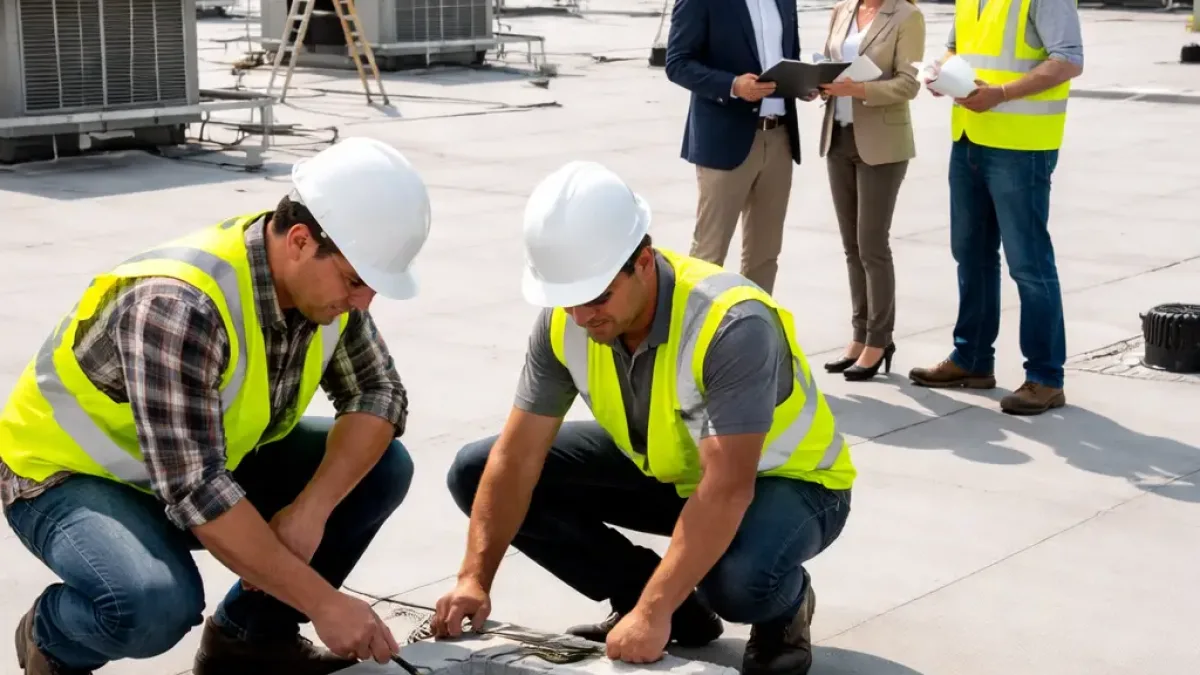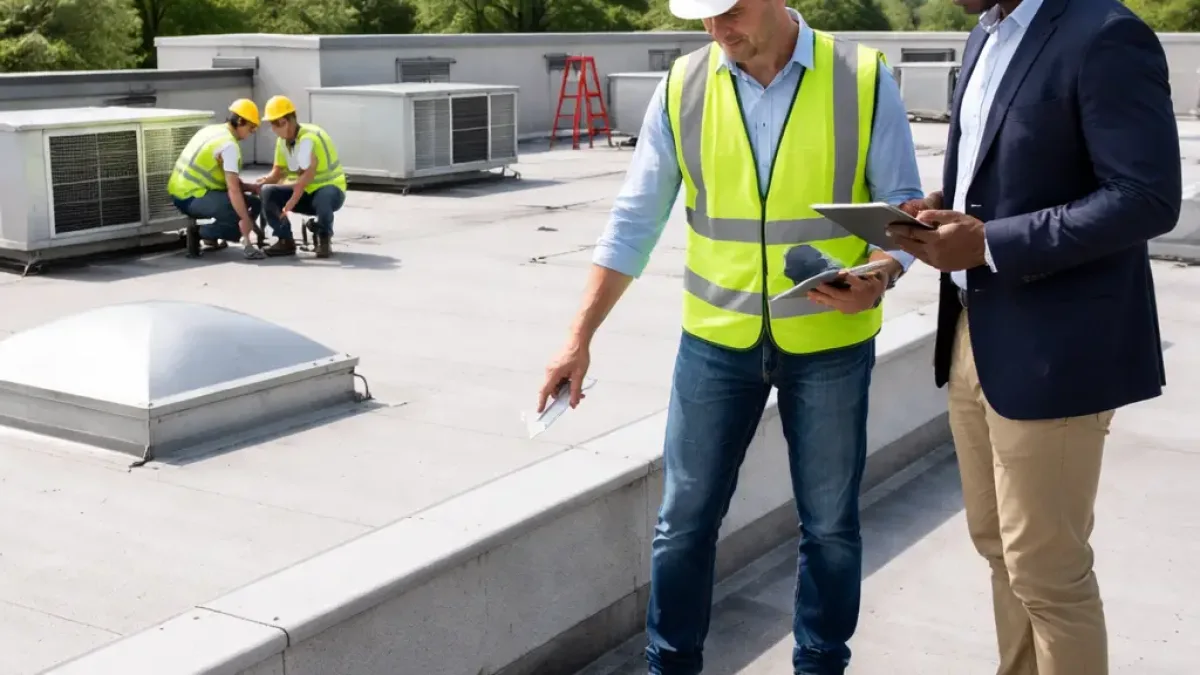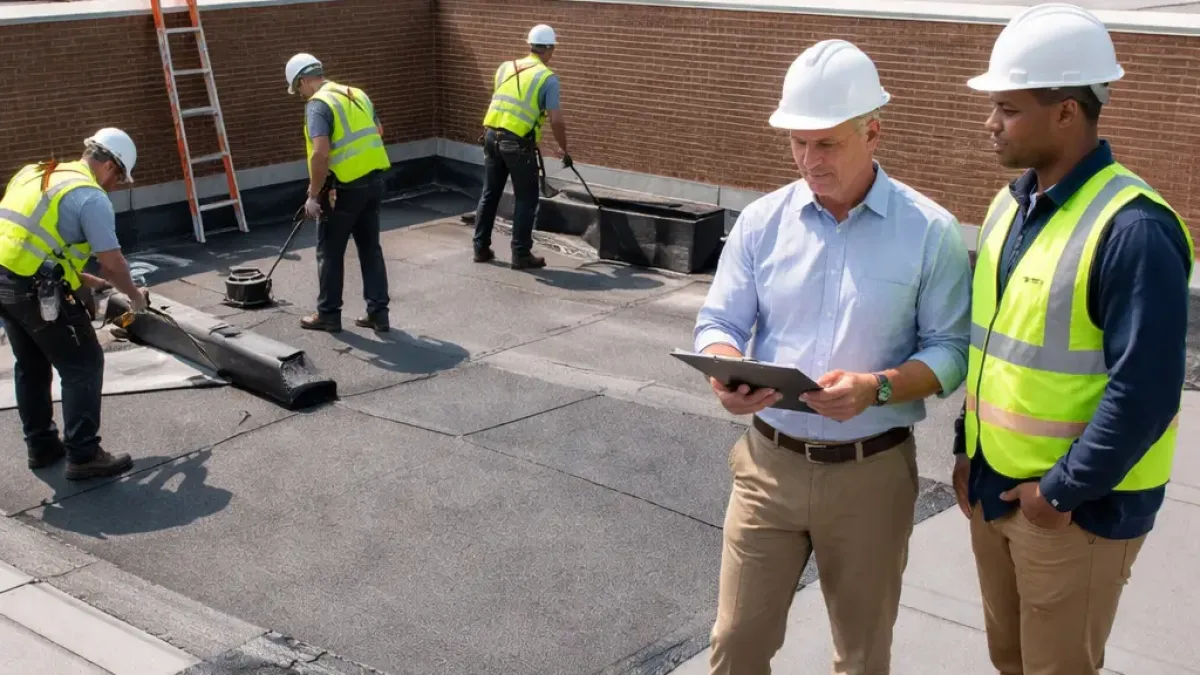
A roof leak in Newark, a stained ceiling in Jersey City, or ponding water on a warehouse in Secaucus usually means one thing: a commercial roof needs attention before the problem spreads. For North Jersey property owners near New York, commercial roof repair is the practical step that addresses membrane damage, flashing issues, drainage concerns, punctures, and seam failures without automatically jumping to replacement. Aaron Blake Commercial Roofing helps commercial property owners, facility managers, and business owners across New Jersey with repairs, restorations, maintenance, and related construction support based on the actual roof condition.
The main takeaway is simple: if you see active leaks, repeated wet spots, or visible roof damage, schedule an inspection soon so a qualified contractor can identify the source, compare repair options, and decide whether a targeted repair, restoration review, or broader service plan makes sense. For many North Jersey buildings, early action is less disruptive than waiting for interior damage to show up. That is especially true for occupied offices, retail centers, schools, churches, warehouses, multifamily properties, and industrial buildings.
Aaron Blake Commercial Roofing serves all of New Jersey and can be reached at +1 (732) 669-7545, by email at info@aaronblakecommercialroofing.com, or through the contact page.
Who this guide is for
This guide is for people who manage commercial roofs in New Jersey and nearby New York-adjacent areas, especially when the roof is past the “watch and wait” stage. It is useful for:
- Commercial property owners comparing repair options
- Property managers handling tenant complaints or recurring leaks
- Facility managers planning inspections and maintenance
- Warehouse and industrial building owners watching for roof wear
- Retail center operators dealing with occupied spaces below the roof
- Churches, schools, and multifamily operators managing budgets and access
- Small business owners who need a straightforward repair plan
If your building is in Newark, Jersey City, Elizabeth, Edison, Woodbridge, New Brunswick, Perth Amboy, Plainfield, Paterson, Clifton, Hackensack, Hoboken, Bayonne, Toms River, Trenton, Princeton, Cherry Hill, Camden, Atlantic City, Morristown, Freehold, Red Bank, Paramus, or Secaucus, the same basic question applies: is the roof showing a localized problem, or is the system telling you it needs broader attention?
Takeaway: The right repair decision depends on roof condition, building use, and how widespread the damage appears.
What commercial roof repair usually means
Commercial roof repair is a targeted service that addresses specific damage or weak points on a roof system. It may include patching membrane damage, reworking flashing, sealing penetrations, replacing damaged sections, improving drainage details, or correcting problem areas around rooftop equipment. It is not the same as a full replacement, and it is not always the same as a restoration project.
For many North Jersey roofs, repair work is the most practical first step when the damage appears limited and the roof still has usable life left. A good inspection should look at the visible problem and the surrounding conditions, because the source of a leak is not always the same as the spot where water shows up inside.
Takeaway: Repair is about solving a specific roof problem without overcommitting to a larger project too early.
Where commercial roof repair is commonly needed in New Jersey
Roof issues do not stay in one neighborhood, but certain property types and high-use areas tend to show them sooner. In North Jersey and nearby regions, repairs are often needed at:
- Urban office and mixed-use buildings in Newark, Jersey City, Hoboken, and Hackensack
- Industrial and warehouse roofs in Secaucus, Elizabeth, Edison, Woodbridge, and Perth Amboy
- Retail centers and strip properties in Paramus, Clifton, Bayonne, and Freehold
- Institutional roofs for schools and churches in Paterson, Plainfield, Morristown, and Princeton
- Multifamily properties and apartment buildings in New Brunswick, Red Bank, and surrounding communities
- South Jersey and shore-area buildings in Cherry Hill, Camden, Trenton, Atlantic City, and Toms River
Local weather matters too. Freeze-thaw cycles, wind, standing water, heavy foot traffic, rooftop equipment, and seasonal storms can all affect repair timing. That is why owners across counties from Hudson and Bergen to Middlesex, Union, Monmouth, Essex, Ocean, Mercer, Burlington, Camden, and Atlantic may want a roof evaluated sooner rather than later.
Takeaway: The same repair issue can show up differently depending on building type, location, and roof exposure.
Common signs a commercial roof needs repair
Some roof problems are obvious. Others only show up after water has already moved through the assembly. The following signs often point to a repair need:
- Active leaks or dripping during or after rain
- Interior staining, bubbling paint, or ceiling discoloration
- Ponding water that remains after rainfall
- Open seams or separating laps
- Cracked, lifted, or torn membrane sections
- Damaged flashing at edges, curbs, parapet walls, or transitions
- Punctures from tools, debris, or foot traffic
- Loose or deteriorated sealant around penetrations
- Rust, corrosion, or movement at metal roof components
- Repeated trouble spots in the same area
It is important to note that the leak inside a building may not be directly above the visible stain. Water can travel along insulation, structural components, or deck details before it becomes noticeable indoors.
Takeaway: Repeated stains, ponding, and membrane damage are all signals to inspect the roof before the issue grows.
How repair needs differ by roof system
Commercial roof repair is not one-size-fits-all. The materials and construction details change how a contractor evaluates the problem and what kind of fix may be appropriate.
| Roof system | What often fails first | Repair focus |
|---|---|---|
| EPDM | Seams, punctures, flashings | Patch work, seam repair, flashing correction, localized membrane work |
| TPO | Seams, heat-welded joints, penetrations | Seam review, patching, detail repair, perimeter and curb work |
| PVC | Seams, aging details, rooftop equipment areas | Localized membrane repair, penetration detailing, flashing attention |
| SBS | Surface wear, flashing points, splits | Modified bitumen patching, detail repairs, flashing and transition fixes |
| Built-up roof | Blisters, cracked surfacing, aging flashings | Section repair, surface restoration review, flashing correction |
| Gravel roof | Hidden membrane wear, drainage issues, flashing problems | Inspection of buried details, flashing repair, surface recovery where needed |
| Foam roof | Surface damage, coating wear, ponding areas | Localized foam repair, coating review, drainage and protective layer assessment |
| Metal roof | Fasteners, seams, penetrations, movement points | Sealant work, panel detail repair, fastener review, transition fixes |
One practical point: the best repair method depends not just on roof type, but also on age, previous repairs, slope, drainage, and how much traffic the roof receives.
Takeaway: Different roof systems fail in different ways, so the repair plan should match the material and the detail.
Repair vs. restoration vs. replacement
Building owners often ask whether they should repair the roof, restore it, or start planning for replacement. The answer depends on the condition of the membrane, the number of trouble spots, and how much of the system is still functioning.
| Option | Best for | Typical goal |
|---|---|---|
| Repair | Localized damage, one-off leaks, limited flashing issues | Address specific problem areas |
| Restoration review | Broader wear, multiple weak points, usable roof life remaining | Improve roof performance without full replacement |
| Replacement planning | Widespread deterioration, repeated failures, end-of-life conditions | Prepare for a larger project and budget cycle |
There is no single answer that fits every building. A warehouse with one puncture near rooftop equipment may only need targeted repair. A retail center with chronic ponding, multiple seams opening up, and recurring leaks may need a more complete review. Aaron Blake Commercial Roofing can help property owners think through those options with a practical roof inspection and service conversation.
Takeaway: Repair is often the first step, but recurring problems may justify a restoration or replacement review.
If you see an active leak, storm damage, or drainage problem
When water is actively entering the building, the first priority is to reduce disruption and understand the source. If a storm has passed and the roof now shows damage, treat the issue as a serious maintenance matter rather than a minor nuisance. If drainage is poor and water remains in the same areas after rainfall, the roof may be under more stress than it appears from the ground.
Useful steps for owners and managers include:
- Document the problem area with notes and photos from a safe location
- Track when the leak appears and whether it changes during heavy rain
- Limit rooftop access to qualified personnel only
- Protect interior assets if water intrusion is active
- Arrange a professional roof inspection and repair evaluation
For roof access, fall protection, and rooftop work, refer to OSHA fall protection guidance and use qualified professionals. Building safety, code, OSHA, and structural concerns should be reviewed with qualified professionals and official sources.
Takeaway: Active leaks and storm damage should move a roof to the front of the maintenance queue.
Practical roof inspection checklist for owners and managers
You do not need to climb the roof to notice many warning signs. A careful walk-around and interior check can help you decide when to call for service.
- Check ceilings, walls, and utility rooms for stains or moisture
- Look for ponding near drains, scuppers, and low points
- Notice any visible membrane bubbles, tears, or lifted edges
- Watch for damaged flashing at curbs, walls, skylights, and pipes
- Review rooftop equipment areas for wear around service paths
- Observe whether the same area keeps failing after rain
- Make note of unusual odors, damp insulation, or soft interior spots
- Compare problem areas to recent storms, foot traffic, or maintenance work
A practical inspection can also help identify whether the issue looks isolated or widespread. That distinction matters when deciding whether a repair is likely to be straightforward or part of a larger pattern.
Takeaway: A consistent inspection routine helps owners catch roof issues before they spread indoors.
Practical repair planning checklist for owners and managers
Before starting work, it helps to have a clear picture of the building and the problem. Good planning makes the conversation with a contractor more productive.
- Identify the roof type if you know it
- List the symptoms: leak, ponding, seam issue, flashing issue, or puncture
- Note when the issue started and how often it occurs
- Share whether the roof has had repeated patching
- Describe rooftop equipment, access points, and traffic patterns
- Ask whether the issue appears localized or systemwide
- Discuss repair, restoration, and maintenance options together
This kind of information helps a commercial roofing contractor evaluate the situation more efficiently and recommend the next step based on the actual roof condition.
Takeaway: Clear information from owners and managers improves the repair conversation and reduces guesswork.
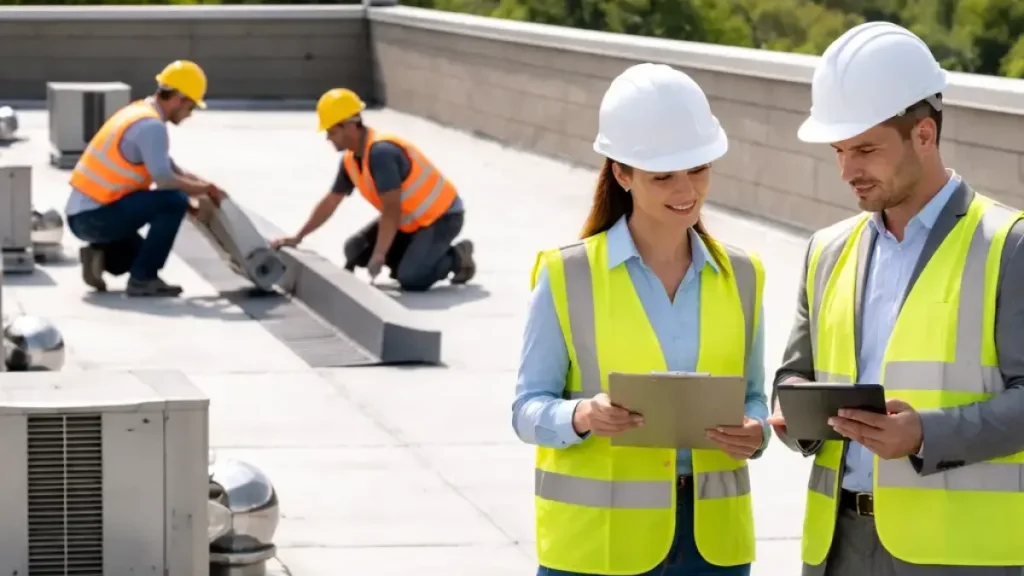
How building use affects repair priorities
The same roof problem can have different business impacts depending on what is below it. A leak above a storage area is not the same as a leak above a waiting room, server room, retail display area, or classroom.
- Occupied offices: Interior disruption and tenant complaints can make even small leaks a priority.
- Warehouses: Water intrusion can affect stored goods, forklifts, and traffic lanes.
- Retail centers: Customer areas and tenant operations may require careful scheduling.
- Schools and churches: Events, classrooms, and public use often narrow repair windows.
- Multifamily buildings: Roof access, resident coordination, and interior protection matter.
- Industrial buildings: Equipment, process areas, and rooftop systems can complicate repair planning.
Use and occupancy do not change the roof physics, but they do affect timing, access, and the level of urgency.
Takeaway: Building use often determines how quickly a roof issue becomes a business issue.
Why drainage, flashing, penetrations, and rooftop equipment matter
Many commercial roof leaks begin at the details rather than the field of the roof. Drainage, flashing, and penetrations deserve close attention because they are common stress points.
Drainage: Ponding water can add weight, keep seams wet longer, and reveal low spots that should be reviewed.
Flashing: Wall transitions, parapets, curbs, and edge metal are frequent leak locations because different materials meet there.
Penetrations: Pipes, vents, skylights, conduit, and supports can become leak points if sealant or detailing ages.
Rooftop equipment: HVAC units and service traffic can create wear paths, dropped tools, and repeated stress in the same area.
When a roof keeps failing in one spot, it is worth asking whether water is entering because of a surface tear or because a detail has started to move, separate, or wear out.
Takeaway: The weak point is often a detail, not the entire roof field.
Why annual maintenance helps reduce surprise repairs
Annual maintenance is not only about cleaning the roof. It is a practical way to monitor seams, flashings, drainage, and surface wear before a small issue becomes a larger one. For New Jersey buildings that face snow, wind, heavy rain, and seasonal temperature swings, maintenance can help owners stay ahead of trouble spots.
A maintenance visit may include a condition review, minor corrections where appropriate, and a better understanding of which areas should be watched over time. It also gives managers a cleaner paper trail for budgeting and planning.
For more detail, see Annual Maintenance Programs.
Takeaway: A maintenance plan helps property owners spot problems earlier and budget more predictably.
How Aaron Blake Commercial Roofing works with New Jersey property owners
Aaron Blake Commercial Roofing is a New Jersey commercial roofing and construction company with more than 30 years of experience. The company serves all of New Jersey and works with industry materials across a range of commercial roof systems, including EPDM, TPO, PVC, SBS, built-up roof systems, gravel roofs, foam, metal roofs, roof repairs, roof restorations, annual maintenance, and related general construction services.
For property owners and managers, that usually means a practical service conversation focused on the roof condition first. If you are dealing with a leak, a storm-related concern, repeated seam issues, or a maintenance decision, the company can help review the problem and discuss likely next steps. You can also review broader service information at Commercial Roofing, Roof Repairs and Restorations, and Areas Serviced.
Takeaway: Local commercial roof repair works best when the contractor looks at the roof system, the building use, and the problem pattern together.
When to schedule a roof inspection or free estimate
Schedule a roof inspection if you notice any of the following:
- Water is entering the building
- The same area keeps leaking
- Drainage is poor after rain
- You see membrane damage, seam separation, or flashing issues
- The roof has had several temporary fixes
- A storm may have affected the roof
- You are planning a budget for repairs or maintenance
If you want a straightforward review from a nearby commercial roofing contractor, contact Aaron Blake Commercial Roofing at +1 (732) 669-7545, email info@aaronblakecommercialroofing.com, or use the contact page to request a commercial roof inspection, repair consultation, restoration review, maintenance program discussion, or free estimate in New Jersey.
Takeaway: If the roof is showing repeated symptoms, it is time to get it inspected rather than waiting for the next storm.
Read more
- Commercial Roofing
- Roof Repairs and Restorations
- Annual Maintenance Programs
- Areas Serviced
- Contact Aaron Blake Commercial Roofing
FAQ
What are the most common signs that a commercial roof in New Jersey needs repair?
Common signs include active leaks, ceiling stains, ponding water, open seams, damaged flashing, punctures, and repeated trouble spots after rain.
Should I repair my commercial roof or consider restoration instead?
Repair usually makes sense for localized damage. Restoration may be worth discussing when the roof has broader wear but still appears to have usable life left. A site review is the best way to compare the options.
How do EPDM, TPO, PVC, SBS, built-up, gravel, foam, and metal roofs differ when it comes to repairs?
Each system tends to fail in different places. Some are more prone to seam issues, others to flashing wear, ponding stress, or punctures. The repair method should match the material and the problem detail.
What should a property manager inspect after a leak or storm event?
Check ceilings, walls, drainage points, visible roof edges if safely accessible, and any areas where equipment or foot traffic may have stressed the roof. Document the issue and arrange a professional inspection.
How often should a commercial roof be inspected in New Jersey?
Many owners choose annual inspections, and additional checks after major storms or when a leak appears. The right timing depends on the roof age, material, and building use.
Can small roof problems turn into larger interior damage if ignored?
Yes. A small opening or loose flashing can let water reach insulation, decking, and interior finishes over time. That is why early review matters.
Does building use affect which repair approach makes the most sense?
Yes. Occupied offices, retail spaces, schools, warehouses, churches, and multifamily buildings often require different scheduling and risk considerations even when the roof problem is similar.
Who should evaluate rooftop safety or structural concerns?
Qualified professionals should evaluate rooftop safety, structural concerns, code issues, and OSHA-related questions. Official sources should be used when those topics come up.
Does Aaron Blake Commercial Roofing serve Newark, Jersey City, Hoboken, Secaucus, and other North Jersey locations?
Yes. Aaron Blake Commercial Roofing serves all of New Jersey, including North Jersey and nearby New York-adjacent areas.
How can I request a roof inspection or free estimate from Aaron Blake Commercial Roofing?
Call +1 (732) 669-7545, email info@aaronblakecommercialroofing.com, or visit the contact page.
For official background on rooftop access, code references, and general building resources, owners can also review OSHA fall protection guidance, New Jersey consumer and contractor resources, the New Jersey Uniform Construction Code, and the New Jersey Business Action Center. For roof surface and heat-reflective considerations, see Department of Energy cool roof guidance and EPA cool roof resources.
Schedule a commercial roof inspection or free estimate
Call Aaron Blake Commercial Roofing at +1 (732) 669-7545 or email info@aaronblakecommercialroofing.com to discuss commercial roof repair, restoration, maintenance, coatings, or exterior property maintenance in New Jersey.