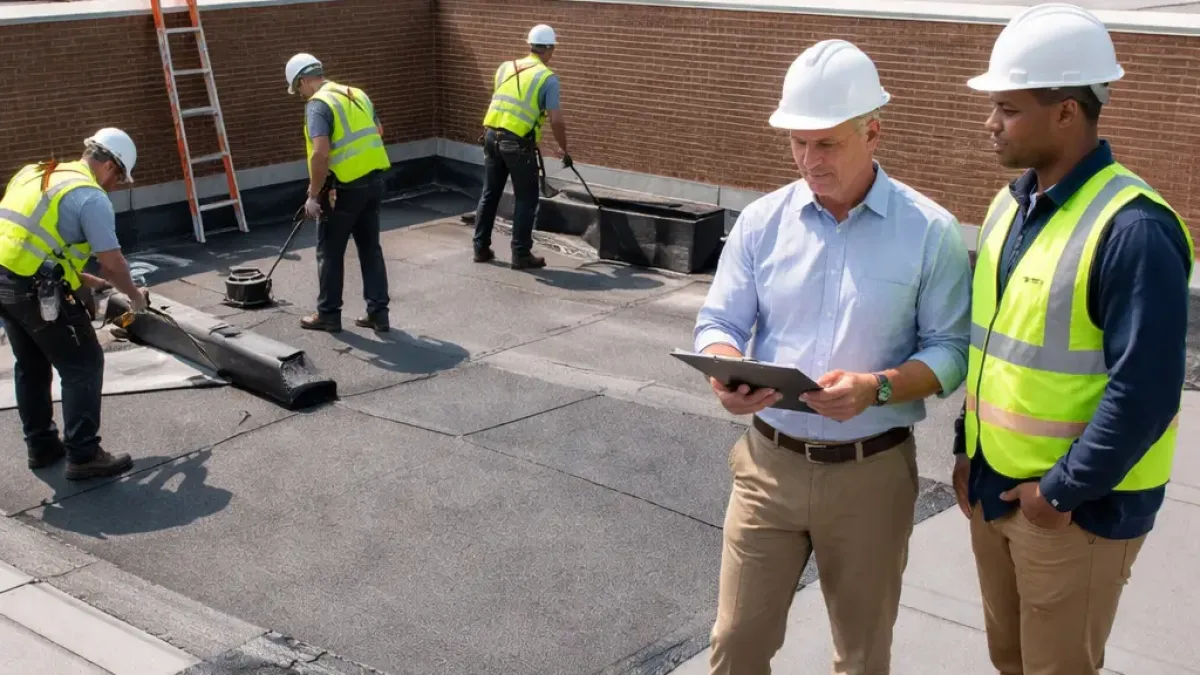
A Jersey City warehouse has a leak near a rooftop unit, or a Trenton retail center has ponding water around a drain after a storm. Those are the kinds of PVC roof problems New Jersey property owners deal with every year. For many commercial buildings, the next step is not an automatic replacement. A targeted repair may be enough if the damage is localized. A restoration may make more sense when the membrane is aging but still serviceable. Aaron Blake Commercial Roofing helps owners, facility managers, and property managers across New Jersey evaluate PVC roof conditions and choose a practical path forward.
PVC roofs are used on many low-slope commercial buildings because they can perform well when seams, flashings, and drainage are maintained. The key is to look at the whole system, not just the visible leak. That means checking membrane condition, seam integrity, roof penetrations, traffic areas, and signs of trapped moisture. In many cases, the best decision comes from a careful inspection and a realistic comparison of repair, restoration, and replacement options. For local support, you can contact Aaron Blake Commercial Roofing at +1 (732) 669-7545 or info@aaronblakecommercialroofing.com, or use the contact page.
What a PVC commercial roof is and where it is commonly found
PVC, or polyvinyl chloride, is a single-ply roofing membrane often used on low-slope commercial roofs. It is common on warehouses, retail centers, schools, churches, multifamily buildings, offices, industrial facilities, and mixed-use properties. On many New Jersey buildings, PVC is selected for roofs that need a clean membrane surface and dependable seam welding when properly installed and maintained.
Like other commercial roof systems, PVC still depends on details. Flashings, terminations, drains, curbs, edge metal, and rooftop equipment areas often determine whether the roof keeps performing or starts to fail. That is why a PVC roof should be evaluated as a system, not just a sheet of membrane. The simple takeaway: PVC can be durable, but details matter.
PVC roof repair vs. PVC roof restoration
Repair and restoration are related, but they serve different needs. A repair is usually a focused fix for a specific problem area. A restoration is broader and is meant to improve the roof surface, address wear across larger sections, and extend usable service life where the roof still has enough remaining integrity. Neither option is automatically right for every building.
| Option | What it usually addresses | Best fit | Notes |
|---|---|---|---|
| Repair | Localized leaks, punctures, flashing issues, seam failures, small damaged areas | Isolated damage with a generally sound roof | Useful when most of the membrane is still in usable condition |
| Restoration | Broader wear, aging seams, surface deterioration, multiple minor trouble spots | Roof systems with moderate wear but no obvious need for full replacement | Requires a careful assessment of the membrane and details |
| Replacement | Extensive deterioration, recurring leaks across large areas, major moisture concerns | Roof systems near the end of useful service | Considered when repair or restoration is no longer practical |
The main point is simple: if the roof is failing in one spot, repair may be enough. If the roof is aging across many areas, restoration may be worth reviewing.
Common signs a PVC roof may need attention
Many commercial roof issues start small. Property managers often notice them first during a walkthrough, a tenant complaint, or a routine inspection. Watch for these warning signs:
- Open or stressed seams
- Loose, cracked, or pulled flashing
- Punctures or cuts in the membrane
- Ponding water that stays after normal rain
- Wrinkling, shrinkage, or movement in the membrane
- Staining on interior ceilings or wall tops
- Soft spots or unusual surface movement
- Damage around rooftop units, vents, drains, and skylights
- Traffic wear near service paths and access points
One sign by itself may not mean the roof is failing, but a pattern of issues usually signals a closer look is needed. The takeaway: repeated symptoms deserve a full assessment, not just a patch.
How to decide between repair and restoration
A practical decision starts with roof age, extent of visible damage, drainage conditions, and how the building is used. A warehouse in Edison with occasional localized flashing damage may be a repair candidate. A school in Hackensack with multiple aging seams and several minor leaks may be a better restoration candidate. The right answer depends on the building, not just the membrane type.
Consider these factors:
- Roof age: Older roofs with many wear points often need a broader solution.
- Damage pattern: One leak is different from multiple leaks spread across the roof.
- Drainage: Poor drainage can accelerate wear and lead to recurring problems.
- Previous repairs: A roof with repeated patches may need a more complete review.
- Building operations: Tenant disruption, inventory protection, and access limits matter.
- Budget planning: Short-term fixes and longer-term work serve different purposes.
If the roof is largely sound but has aging details, restoration may be a better use of resources than repeated small repairs. If the problem is limited and the rest of the system is stable, repair is often the more practical step. The takeaway: compare the roof condition, not just the leak.
Common PVC roof problems and practical responses
Here is a simple problem-and-response view that helps owners and facility teams think through next steps.
- Seam separation: Inspect the seam length, nearby membrane condition, and whether the issue is isolated or widespread.
- Flashing damage: Review edges, walls, curbs, and transitions where movement and weather exposure often show up first.
- Ponding water: Check drains, scuppers, tapered areas, and low spots that may collect water after rain.
- Membrane punctures: Look for foot traffic damage, dropped tools, rooftop service activity, or sharp edges near equipment.
- Interior staining: Confirm the leak path carefully, since water can travel before it becomes visible inside.
- Aging roof surface: Evaluate whether the membrane still has enough usable life to justify restoration work.
Small issues may be manageable. Repeated issues usually point to a larger condition problem. The takeaway: recurring patterns are more important than a single wet spot.
Inspection checklist before calling a contractor
Property managers and facility teams can gather useful information before requesting an inspection. This does not replace a professional review, but it can help the conversation start in a focused way.
- Note where the leak or problem appears inside the building.
- Check whether the issue appears after heavy rain, wind, or snow melt.
- Look for ponding water on the roof from a safe vantage point.
- Identify nearby rooftop equipment, drains, seams, and penetrations.
- Review whether the area has had prior repairs.
- Photograph visible stains, membrane damage, or debris when possible.
- Record whether tenants, employees, or equipment are affected.
If roof access is difficult or the area appears unsafe, do not force the inspection. Building safety, code, OSHA, and structural concerns should be reviewed with qualified professionals and official sources. For general fall-protection information, see OSHA Fall Protection in Construction. The takeaway: good notes help, but safety comes first.
What a professional PVC roof assessment may review
A careful commercial roof assessment usually looks beyond the obvious leak. For a PVC roof, a contractor may review:
- Membrane condition across representative roof areas
- Seams and welded joints
- Flashing at walls, curbs, and penetrations
- Roof edges, terminations, and transitions
- Drains, scuppers, and water flow patterns
- Skylights and rooftop equipment areas
- Signs of foot traffic or maintenance wear
- Visible concerns that may point to moisture under the membrane
On some buildings, the visible problem is not the full story. For example, a ceiling stain near a mechanical room may trace back to a failed flashing around an adjacent curb. A good assessment helps narrow the source before work begins. The takeaway: the visible leak is only one clue.
When restoration may be a better fit than repeated repairs
Restoration deserves consideration when the roof still has enough sound material to support additional service life, but small repairs are starting to pile up. That often happens when the membrane is aging, seams need attention in multiple areas, or the roof surface is showing widespread wear without obvious structural concerns.
Restoration may be worth discussing if:
- The roof has multiple minor issues instead of one major failure
- Leaks keep returning in different areas
- The membrane is worn but not broadly deteriorated
- The roof needs a more organized, long-term maintenance approach
- The building needs a practical option that fits planned operations
Restoration is not a shortcut. It still depends on the current roof condition and the details of the building. But on the right roof, it can be a practical middle path between patching and replacement. The takeaway: restoration can make sense when the roof is tired, but not finished.
When repair is usually the more practical option
Repair is often the right response when the issue is limited and the rest of the roof is in solid condition. A small puncture, a damaged flashing section, or a localized seam issue can often be addressed without moving to a broader scope.
Repair may be the better choice when:
- The damage is isolated
- The membrane around the issue is still sound
- Drainage is generally acceptable
- There are no signs of widespread failure
- The building needs a focused fix to protect operations quickly
One caution: a repair should solve the actual problem, not just cover what is visible from the ground. The takeaway: narrow damage often calls for a narrow solution.
How PVC roof work supports different NJ building types
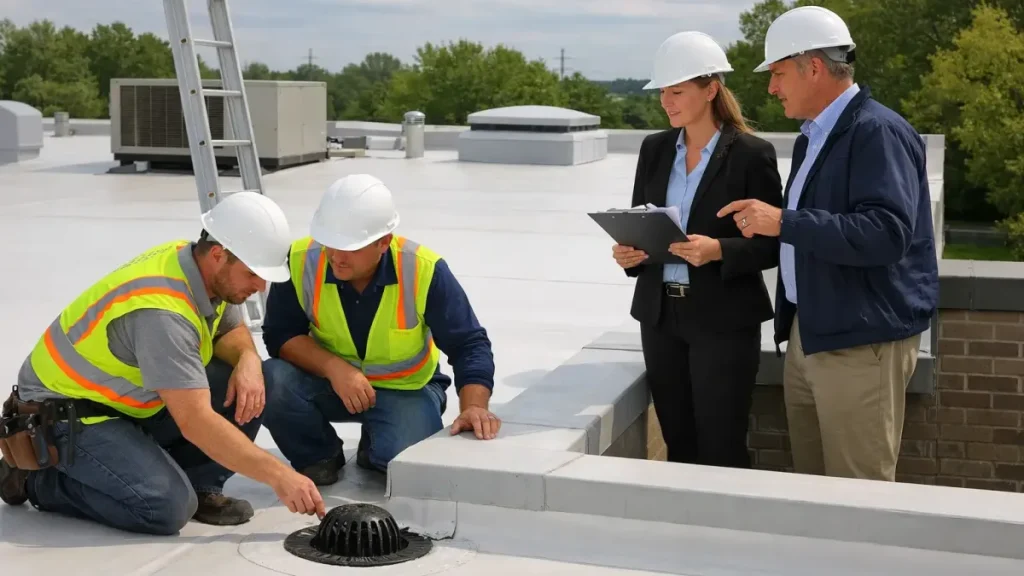
Across New Jersey, PVC roof problems show up differently depending on the building type. Warehouses in Edison or Secaucus may see wear around rooftop equipment and service paths. Retail centers in Paramus or Cherry Hill may deal with flashing and drainage issues near signage, tenant units, and visible roof edges. Schools, churches, and multifamily buildings often need work scheduled around occupants, access limits, and daily operations.
Industrial facilities in Paterson, Elizabeth, and Bayonne may have more traffic, more equipment penetrations, and more rooftop service activity. Office properties in Princeton or Morristown may have smaller roofs but still need careful attention to seams and drainage. The roofing method may be similar, but the operational needs are different. The takeaway: the right roof plan should match the building use.
New Jersey city and county context
Aaron Blake Commercial Roofing serves commercial properties across New Jersey, including Newark, Jersey City, Elizabeth, Edison, Woodbridge, New Brunswick, Perth Amboy, Plainfield, Paterson, Clifton, Hackensack, Hoboken, Bayonne, Toms River, Trenton, Princeton, Cherry Hill, Camden, Atlantic City, Morristown, Freehold, Red Bank, Paramus, and Secaucus. That broad service area matters because weather exposure, roof age, and building use vary from one part of the state to another.
For example, coastal and wind-exposed properties may see faster wear at edges and flashings. Urban buildings may have more rooftop access issues and service traffic. Warehouse and industrial roofs may have more penetrations and equipment-related wear. The takeaway: local conditions shape how PVC roofs age in New Jersey.
For additional service-area context, see Areas Serviced and Commercial Roofing.
Preventive maintenance tips that help extend useful roof life
Routine maintenance cannot guarantee performance, but it can help identify issues earlier and reduce avoidable surprises. A practical PVC maintenance plan usually includes:
- Regular visual checks after major storms
- Drain and scupper cleaning
- Review of seams, flashings, and terminations
- Inspection of rooftop equipment areas
- Monitoring of foot traffic paths and service access points
- Follow-up on any visible staining or moisture signs
If your building has a history of roof issues, annual or seasonal maintenance can help your team stay ahead of repeated trouble areas. See Annual Maintenance Programs for a practical starting point. The takeaway: maintenance is most useful when it is consistent.
Roof work should be based on current conditions, not assumptions. A careful inspection is the best starting point for deciding whether a PVC roof needs repair, restoration, or a different solution.
For broader service options, Aaron Blake Commercial Roofing also provides related commercial roofing support through PVC Roof Repairs and Restorations, Roof Restoration Systems, Roof Repairs and Restorations, and Commercial Roofing Services.
Comparison: repair, restoration, or replacement
| Decision point | Repair | Restoration | Replacement |
|---|---|---|---|
| Best for | Localized damage | Widespread wear with remaining usable roof life | Extensive deterioration |
| Scope | Focused | Broader system review and improvement | Full roof system work |
| Operational impact | Usually limited | May require planning and staged work | Typically the largest project |
| Typical trigger | Single leak or isolated issue | Multiple minor issues or aging roof details | Roof is no longer practical to repair or restore |
| Key question | Is the problem isolated? | Is the roof still broadly serviceable? | Is the roof near the end of useful life? |
This comparison is meant to help guide the discussion, not replace an on-site assessment. The takeaway: the roof’s actual condition should drive the scope.
What to expect when you contact Aaron Blake Commercial Roofing
When you reach out to Aaron Blake Commercial Roofing, the conversation should start with your building type, roof concerns, location in New Jersey, and any recent leak history. A good first step is a commercial roof inspection, repair consultation, restoration review, maintenance program discussion, or free estimate.
You can call +1 (732) 669-7545, email info@aaronblakecommercialroofing.com, or use the contact page. The company serves New Jersey commercial properties and works with roofing systems including PVC, EPDM, TPO, SBS, built-up roof systems, gravel, foam, and metal roofs, along with related general construction services. The takeaway: a clear building summary makes the next step easier.
FAQ
What is the difference between PVC roof repair and PVC roof restoration?
Repair is usually a focused fix for a specific issue like a puncture, seam problem, or flashing failure. Restoration is a broader scope intended to improve the roof surface and address more widespread wear when the membrane still has usable life.
How do I know if my commercial PVC roof can be repaired instead of restored or replaced?
Start with the age of the roof, the number of problem areas, the condition of the seams and flashing, and whether leaks keep returning in different places. If the damage is isolated and the rest of the roof is sound, repair may be practical. If there are multiple problem areas, restoration may be worth reviewing.
What are the most common signs of PVC roof damage on commercial buildings in NJ?
The most common signs include seam separation, flashing damage, ponding water, membrane punctures, wrinkling or shrinkage, and interior stains. Rooftop traffic areas and equipment curbs are also common trouble spots.
Can a PVC roof restoration help stop leaks without a full replacement?
It can help in some cases, but the roof must be in suitable condition for restoration. A professional assessment is needed to determine whether the membrane and details are sound enough for that approach. No restoration should be assumed to fit every roof.
How often should a commercial PVC roof be inspected in New Jersey?
Many owners schedule inspections at least annually and after major storms, but the right timing depends on the building, roof age, and past issues. Roofs with recurring problems should be checked more often.
What parts of a PVC roof are most likely to fail first?
Seams, flashings, penetrations, drains, edges, and areas with repeated foot traffic are common early trouble spots. Rooftop equipment zones often deserve extra attention.
Does ponding water always mean a PVC roof needs replacement?
No. Ponding water may point to drainage issues, low spots, or other roof conditions that should be evaluated. It does not automatically mean replacement, but it should not be ignored.
Who should I call for a commercial PVC roof inspection in New Jersey?
A local commercial roofing contractor with PVC repair and restoration experience is a practical place to start. Aaron Blake Commercial Roofing serves New Jersey commercial properties and can review roof condition, explain the options, and provide a free estimate.
Read more
For related reading, see Long-Term Roof Repairs: Cost-Effective Solutions for NJ Businesses, Commercial Roofing, Roof Repairs and Restorations, and Home.
If your PVC roof is leaking, ponding, or showing seam or flashing wear, call Aaron Blake Commercial Roofing at +1 (732) 669-7545 or email info@aaronblakecommercialroofing.com to schedule a commercial roof inspection, repair consultation, restoration review, maintenance program discussion, or free estimate in New Jersey.
Schedule a commercial roof inspection or free estimate
Call Aaron Blake Commercial Roofing at +1 (732) 669-7545 or email info@aaronblakecommercialroofing.com to discuss commercial roof repair, restoration, maintenance, coatings, or exterior property maintenance in New Jersey.