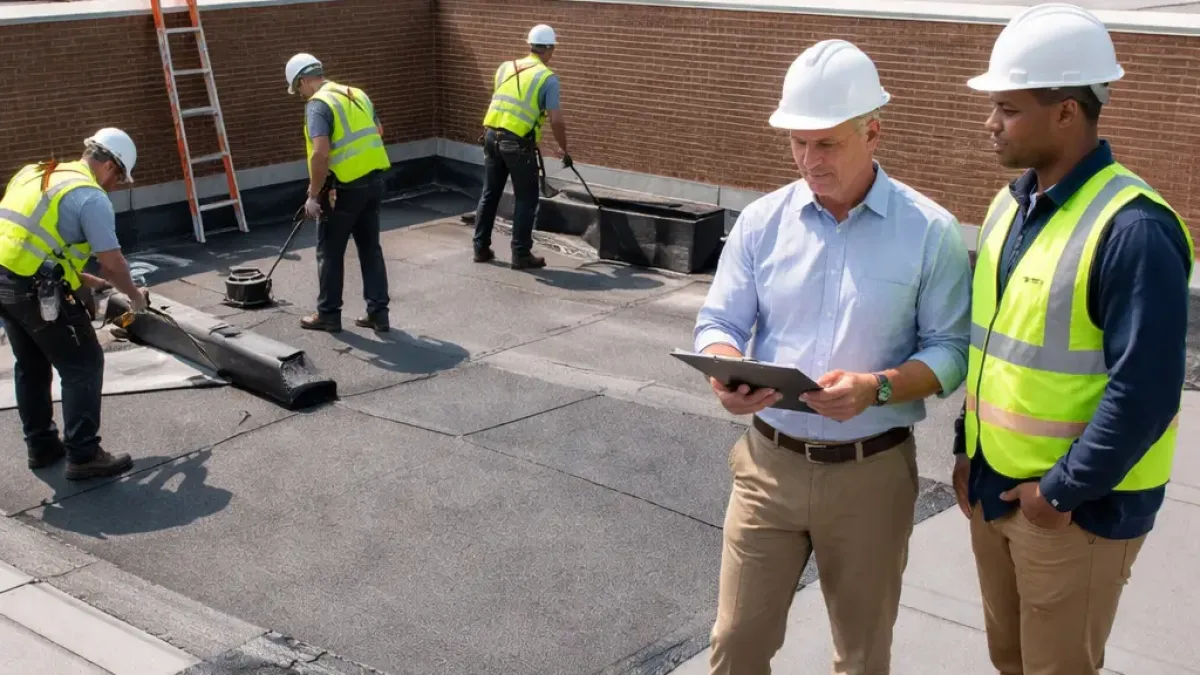
A Jersey City warehouse has ponding water near an aging seam, or a retail center in Newark keeps seeing the same small leak after heavy rain. In situations like that, a silicone roof coating system may be worth evaluating before jumping straight to full replacement. For New Jersey commercial property owners and facility managers, the main question is simple: is the roof still serviceable enough for restoration, or does it need more than a coating?
Silicone roof coatings are used as part of a commercial roof restoration strategy, not as a universal fix. They can help protect certain roof surfaces, improve weather resistance, and support ongoing maintenance when the existing roof is still structurally sound and the membrane is compatible. Aaron Blake Commercial Roofing helps New Jersey building owners compare roof repairs, restorations, and replacement decisions for EPDM, TPO, PVC, SBS, built-up roofs, gravel roofs, foam, and some metal roof conditions. The takeaway is straightforward: a silicone system can be a practical option, but only after a careful inspection of the roof condition, drainage, seams, flashing, and previous repairs.
What a silicone roof coating system is
A silicone roof coating system is a liquid-applied roofing solution that cures into a seamless protective layer over a suitable existing roof surface. On commercial buildings, it is generally considered when the roof is aging but still has enough life left to justify restoration work. It is different from a simple patch because it covers broader areas. It is also different from full replacement because the existing roof remains in place if it is still suitable for coating.
For many New Jersey property managers, the value of a silicone system is in targeted restoration. It may help address weathering, small leaks, seam issues, and UV exposure, but it is not meant to correct every roofing problem. The roof still needs to be evaluated carefully before any coating work begins.
Bottom line: silicone coatings are a restoration tool, not a substitute for solving major roof defects.
Which commercial roof types may be considered
Silicone coatings are often discussed for a range of commercial roof systems, but the right answer depends on the actual roof condition and surface compatibility. Common candidates may include:
- EPDM roofs that are aging but still stable
- TPO roofs with manageable surface wear
- PVC roofs that need restoration review
- SBS modified bitumen systems
- Built-up roof systems
- Gravel roofs that have been properly prepared
- Foam roof systems in the right condition
- Some metal roof situations, depending on rust, fastening, and substrate preparation
A roof type alone does not decide the project. Seams, flashing, drainage, roof traffic, and prior repairs often matter just as much. A coating may work on one roof with minor wear and be a poor choice on another roof with the same material but different damage.
Bottom line: the roof material matters, but condition and prep matter more.
When silicone coatings may be worth considering
For New Jersey commercial buildings, silicone roof coatings are most often reviewed when the roof is aging but not yet at the end of its useful life. That includes roofs with recurring minor leaks, visible weathering, UV damage, or surface wear that has not turned into major system failure.
- Roof age is getting high, but the system is still generally serviceable
- There are repeated small leaks in localized areas
- Ponding water is a recurring concern
- The building wants restoration instead of immediate replacement
- Maintenance history exists, but the roof needs a broader protective layer
- Heat and sun exposure are accelerating surface aging
In New Jersey, this conversation is common for warehouses, retail centers, schools, churches, offices, and multifamily properties that want to get more practical use from an existing roof without overcommitting to a replacement before it is clearly necessary.
Bottom line: silicone coatings are most useful when the roof still has usable life and needs controlled restoration.
When silicone coatings may not be the right fit
There are also roofs where a coating is not the best next step. If the roof has wet insulation, severe membrane failure, large areas of saturation, major structural concerns, or broad damage that keeps spreading, a coating may only address the surface while the underlying problems remain.
Other caution signs include widespread blistering, extensive open seams, major deterioration around penetrations, or a roof deck and drainage condition that needs more than restoration. In those situations, a repair plan or replacement discussion may be more appropriate.
Building safety, code, OSHA, and structural concerns should be reviewed with qualified professionals and official sources.
If a roof is too far gone for restoration, applying a coating can create false confidence. A careful inspection is the safer first step.
Bottom line: if the roof has major hidden damage, a coating is usually not the right first answer.
How silicone coatings compare with other roofing options
Property owners often compare spot repairs, restoration systems, and replacement. Each has a different purpose.
| Option | Best use | What it does | Key caution |
|---|---|---|---|
| Spot repairs | Small, isolated leaks or damage | Targets specific problem areas | May not solve broader aging or surface wear |
| Silicone coating system | Aging but serviceable roofs | Adds a protective restoration layer | Requires compatible roof conditions and proper prep |
| Full restoration system | Roof needing broader corrective work | Combines repairs, prep, and restoration steps | Needs a full assessment of the roof condition |
| Replacement | Severe failure or end-of-life roofs | Removes the old system and installs a new one | Usually a larger project with more disruption |
For many New Jersey facilities, the decision is not coating versus nothing. It is coating versus a more complete restoration strategy or replacement. A practical contractor should explain the pros and limits of each path before any commitment is made.
Bottom line: the right answer depends on the roof’s actual condition, not just the desired outcome.
Important inspection points before a coating estimate
A commercial roof inspection should be more than a quick look from the ground. A coating estimate is only useful if it is based on the actual roof surface, details, and drainage behavior. New Jersey property managers should ask for attention to the following items:
- Surface condition: look for cracks, brittleness, open laps, and weathering
- Seams: check whether joints are stable or separating
- Flashing: inspect edges, terminations, and transitions around walls and curbs
- Roof penetrations: review vents, pipes, skylights, HVAC curbs, and other through-roof details
- Drainage: identify blocked drains, low spots, and areas that hold water
- Ponding water: determine whether it is isolated or recurring across the roof
- Previous repairs: note old patches, incompatible materials, or uneven surfaces
- Traffic areas: check walk paths, service zones, and equipment access points
- Weather exposure: assess the side of the roof that takes the harshest sun, wind, and rain
These details help decide whether a silicone system is practical or whether more repair work is needed first. A roof that is not prepared correctly is a weak candidate for any coating.
Bottom line: the inspection should focus on condition, compatibility, and water movement.
Practical benefits and limitations
Silicone roof coatings are often considered because they can add useful protection over a suitable existing roof. They are commonly discussed for their resistance to standing water, weather exposure, and UV degradation. In New Jersey, those factors matter because commercial roofs see freeze-thaw changes, summer heat, storms, and seasonal debris.
Potential advantages include:
- Added weather protection over a compatible roof
- A seamless surface over selected areas
- Useful support for restoration planning
- Potential reflectivity benefits on some buildings
- Maintenance value when paired with routine inspections
Limitations are just as important:
- Coatings do not fix hidden structural or wet-insulation problems
- They depend on strong surface prep
- They rely on a roof substrate that is suitable for restoration
- They may not be the best option for every membrane or every leak pattern
- They still need maintenance after installation
Owners should also compare coating goals with broader energy and roof performance goals. For general context on cool roof concepts, trusted resources like the Department of Energy Cool Roofs, EPA Cool Roofs and Heat Islands, and ENERGY STAR Cool Roofs can be useful starting points.
Bottom line: the value of a silicone coating comes from proper prep, proper use, and regular follow-up care.
Silicone coating versus restoration, repairs, and replacement
Some buildings only need roof repairs. Others need a broader restoration plan. A silicone coating may fit inside either approach, but it should not be treated as a one-step answer for every roof problem.
A spot repair is the right choice when the issue is small and isolated. A roof restoration system is better when the roof needs multiple corrective steps and a broader protective finish. Replacement becomes the conversation when the roof system is too deteriorated for reliable restoration.
For readers comparing options, these internal resources may help: Roof Restoration Systems, Roof Repairs and Restorations, and The Role of Roof Coatings in Leak Prevention.

Bottom line: the best solution is the one that fits the roof condition, not the most aggressive or the most minimal option.
Building types in New Jersey that often ask about silicone coatings
Silicone roof coatings come up often for buildings that have broad roof areas, moderate traffic, or a practical need to control maintenance without immediate replacement. In New Jersey, that often includes:
- Warehouses and distribution centers
- Retail centers and strip plazas
- Churches and worship facilities
- Schools and educational buildings
- Multifamily properties
- Office buildings
- Light industrial facilities
- Small business properties with flat or low-slope roofs
These buildings usually care about access, uptime, tenant disruption, and long-term planning. A coating can be a reasonable topic when the roof is still functional but showing age. It may be less useful when the building has major interior sensitivity, repeated water intrusion, or a roof that has already moved beyond restoration.
Bottom line: coatings are often evaluated on occupied New Jersey buildings where phased repair planning matters.
How New Jersey conditions affect the decision
New Jersey roofs face a mix of weather exposure that can shorten service life or increase maintenance needs. Coastal areas may see stronger wind and salt exposure. Inland areas may deal more with seasonal temperature swings, snow, ice, and storm runoff. Heavily used urban roofs can also see more traffic from service visits, HVAC work, and rooftop equipment maintenance.
That is why the same silicone coating system can make sense on one building in Trenton and be a poor fit on another building in Atlantic City, Newark, or Paramus. Roof age, local exposure, drainage, and maintenance history all influence the outcome.
New Jersey building owners in Newark, Jersey City, Elizabeth, Edison, Woodbridge, New Brunswick, Perth Amboy, Plainfield, Paterson, Clifton, Hackensack, Hoboken, Bayonne, Toms River, Trenton, Princeton, Cherry Hill, Camden, Atlantic City, Morristown, Freehold, Red Bank, Paramus, and Secaucus often look for practical ways to extend roof life while planning around budgets and building use. That is where a local inspection becomes especially helpful.
Bottom line: regional weather and building traffic can change whether a coating is practical.
How Aaron Blake Commercial Roofing approaches these projects
Aaron Blake Commercial Roofing serves all of New Jersey and works with commercial and industrial property owners who need a clear assessment, not a sales pitch. With more than 30 years of experience in commercial roofing and construction, the company handles EPDM, TPO, PVC, SBS, built-up roof systems, gravel roofs, foam, metal roofs, roof repairs, roof restorations, annual maintenance, and related general construction services.
For a silicone coating conversation, a practical assessment usually starts with roof condition, then moves to repair needs, drainage issues, and compatibility. That process helps determine whether the building is a candidate for restoration, whether more work is needed first, or whether replacement should be discussed instead.
Readers can also review Commercial Roofing, Commercial Roof Restoration Systems in New Jersey: Coatings, Silicone, Foam, and Repairs, and Annual Maintenance Programs for broader planning context.
Bottom line: a careful roof evaluation is the starting point for every responsible coating discussion.
What to ask before you request an estimate
Before scheduling a coating estimate, it helps to gather a few basics about the roof. That makes the conversation faster and more accurate.
- What roof type is currently installed?
- How old is the roof, approximately?
- Where are the leaks or problem areas showing up?
- Has the roof had prior repairs or restorations?
- Are there wet insulation concerns or known saturation areas?
- Does the roof hold water after rain?
- Are there many rooftop units, vents, or other penetrations?
- How often is the roof inspected and maintained?
If you do not know the answers, that is normal. A site visit can help document the roof condition and narrow the options.
Bottom line: a few basic roof details can make the estimate much more useful.
Comparison table: when silicone is more or less likely to fit
| Roof condition | Silicone coating fit | Why |
|---|---|---|
| Aging but serviceable roof | Often possible | The roof may still have enough life for restoration |
| Small recurring leaks | Sometimes possible | May work if the leaks are tied to surface wear or details |
| Ponding water | Potentially useful | Silicone is often discussed for water resistance, but drainage still matters |
| Wet insulation | Less likely | Hidden moisture can undermine the project |
| Widespread membrane failure | Less likely | The roof may need larger repairs or replacement |
| Heavy roof traffic | Depends | Walk paths and service areas need careful planning |
Bottom line: coating suitability rises when the roof is stable and falls when underlying damage is broader.
FAQ
What is a silicone roof coating system on a commercial building?
It is a liquid-applied protective layer installed over a suitable existing roof surface. On a commercial building, it is usually considered as part of a roof restoration plan rather than as a simple patch or a full roof replacement.
Which commercial roof types in New Jersey are often considered for silicone coating?
EPDM, TPO, PVC, SBS, built-up roofs, gravel roofs, foam roofs, and some metal roof situations may be evaluated. The final decision depends on the roof’s condition, surface preparation needs, and compatibility.
How do I know if my roof is a candidate for a silicone restoration system?
The roof should usually be aging but still serviceable, with manageable leaks or surface wear rather than widespread failure. A qualified commercial roofing contractor should inspect seams, flashing, drainage, ponding water, penetrations, and any signs of wet insulation or structural concern.
What are the main benefits and limitations of silicone roof coatings?
Benefits may include added weather resistance, a seamless surface, and restoration value for a suitable roof. Limitations include the need for proper prep, roof compatibility, and the fact that coatings do not solve major hidden problems.
Is silicone coating better than repairing the roof or replacing it?
Not always. Spot repairs are best for isolated problems, restoration systems work better for broader aging roofs, and replacement is often the better choice when the roof has major failure or is beyond practical restoration. The right path depends on the inspection findings.
Can silicone roof coatings help with ponding water?
They may be considered on roofs that have ponding water concerns, but drainage problems still need attention. Coating alone should not be viewed as a substitute for correcting the conditions that allow water to collect.
How often should a coated commercial roof be inspected and maintained?
Inspection timing should be based on the building and roof use, but coated roofs should still be checked regularly and after major weather events. Annual maintenance is often a practical way to monitor seams, drainage, debris, traffic areas, and flashing details.
What should a property manager check before requesting a coating estimate?
Start with roof type, age, known leak locations, prior repairs, drainage, ponding water, roof penetrations, and traffic areas. If those details are unclear, a professional inspection can document the conditions before a recommendation is made.
How can I get a roof inspection or free estimate from Aaron Blake Commercial Roofing?
Call +1 (732) 669-7545, email info@aaronblakecommercialroofing.com, or visit /contact-us/ to schedule a commercial roof inspection, repair consultation, restoration review, maintenance program discussion, or free estimate in New Jersey.
CTA
If your New Jersey commercial roof is aging, leaking, ponding, or showing surface wear, Aaron Blake Commercial Roofing can help you evaluate whether silicone coating, repair work, restoration, or replacement is the better fit. Call +1 (732) 669-7545 or email info@aaronblakecommercialroofing.com to schedule a commercial roof inspection, repair consultation, restoration review, maintenance program discussion, or free estimate. You can also start here: /contact-us/.
Read more
- Roof Restoration Systems
- Silicone Roof System
- Roof Repairs and Restorations
- Annual Maintenance Programs
- Commercial Roofing
- Areas Serviced
- Contact Aaron Blake Commercial Roofing
Concise takeaway: Silicone roof coating systems can be a practical restoration option for some New Jersey commercial roofs, but only after a careful inspection confirms that the roof is stable, compatible, and worth restoring.
For general contractor oversight and building-owner resources, see the New Jersey Division of Consumer Affairs Home Improvement Contractors. For broader code-related questions, use the New Jersey Uniform Construction Code. For safe roof access and fall-protection topics, review OSHA Fall Protection in Construction.
Schedule a commercial roof inspection or free estimate
Call Aaron Blake Commercial Roofing at +1 (732) 669-7545 or email info@aaronblakecommercialroofing.com to discuss commercial roof repair, restoration, maintenance, coatings, or exterior property maintenance in New Jersey.