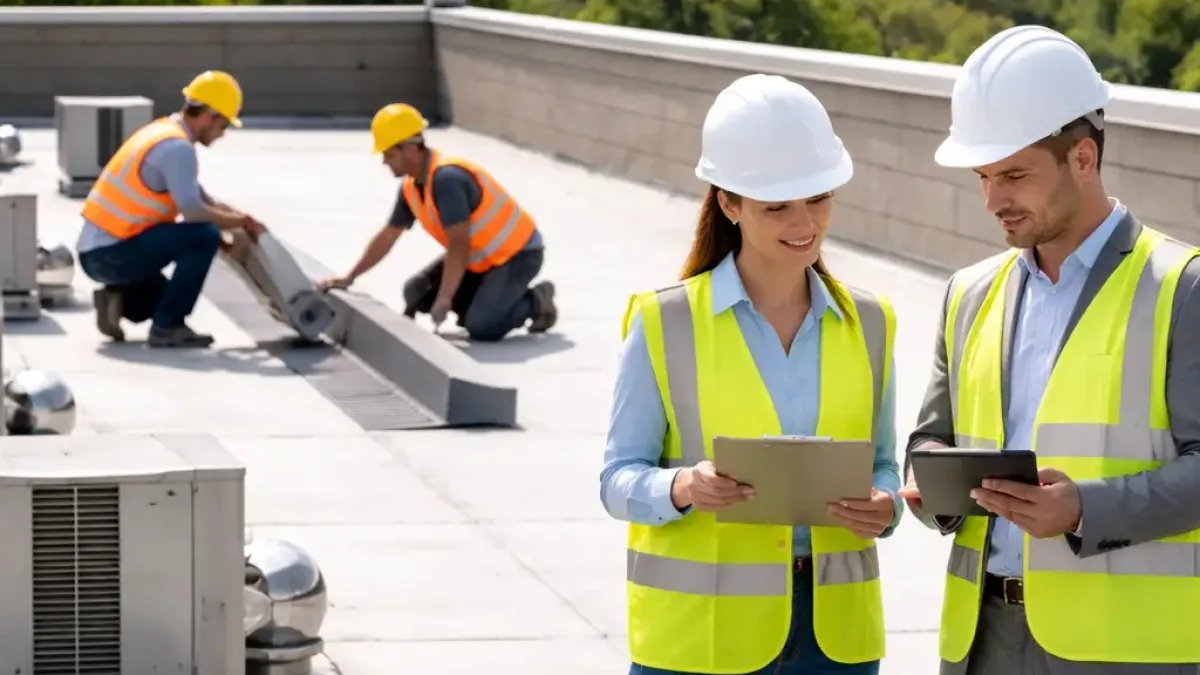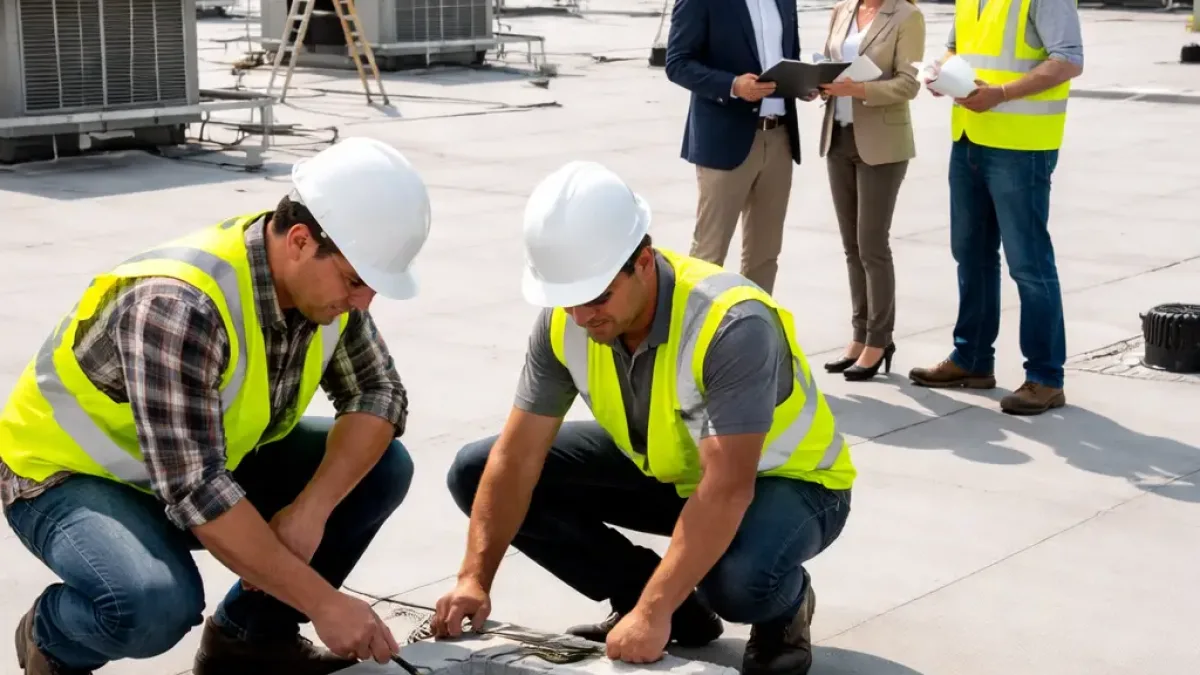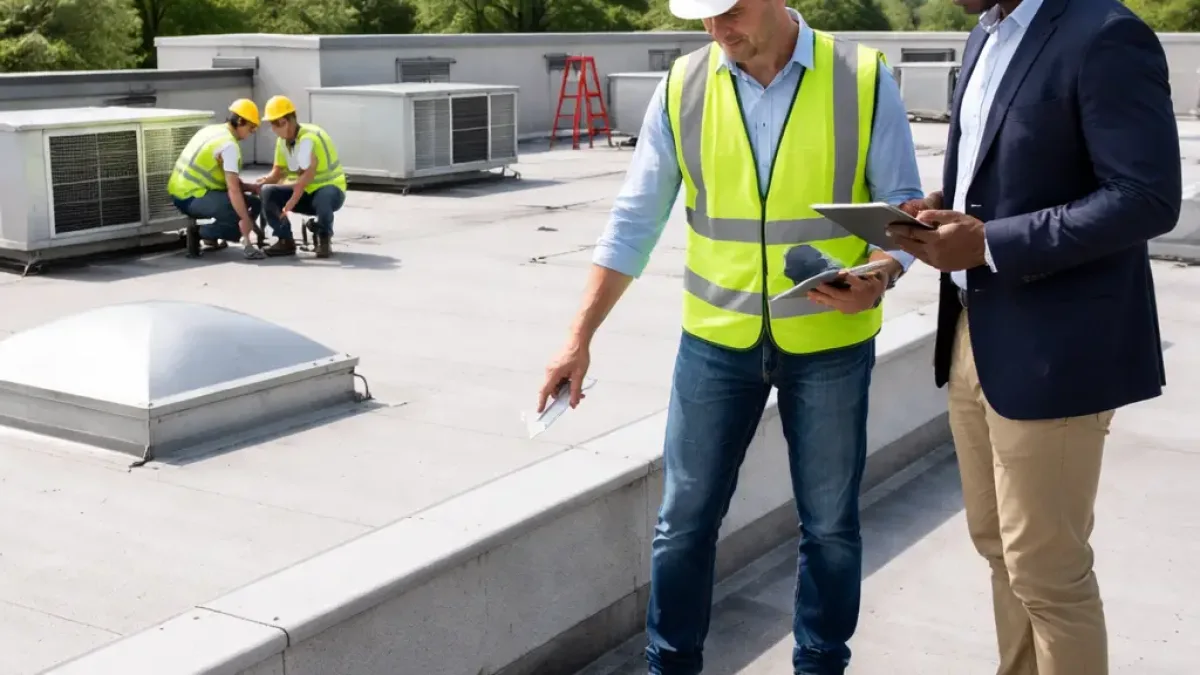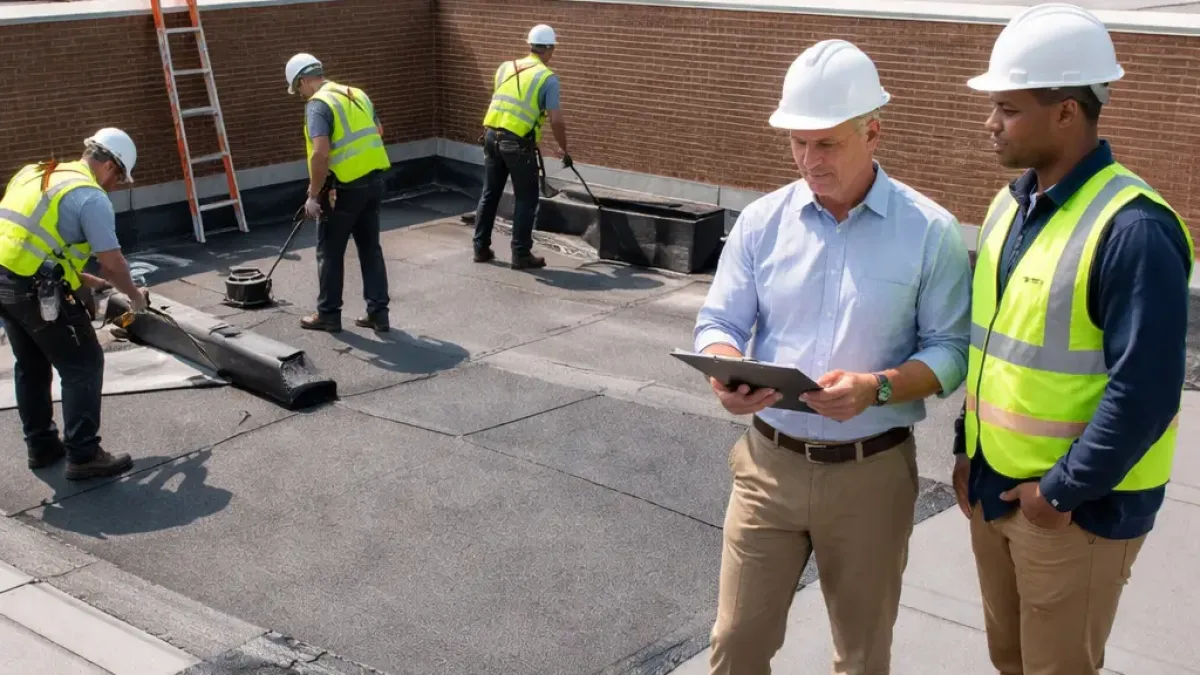
A roof leak over a warehouse bay in Newark, ponding water on a retail center in Jersey City, or cracked flashing on a school in Edison usually points to a repair decision that should be made quickly and carefully. For many New Jersey commercial properties, SBS cold process and built-up roof repair is the practical path when the roof is still serviceable but showing wear at seams, penetrations, or drainage points. Aaron Blake Commercial Roofing helps building owners, property managers, and facility managers across New Jersey evaluate SBS and built-up roof systems, decide whether spot repair or restoration makes more sense, and plan maintenance in a way that fits the building’s age and condition.
SBS cold process roofing is commonly used for targeted repairs and restoration work on modified bitumen-style roofs. Built-up roofing, often called BUR, uses multiple plies with surfacing such as gravel or coating. Both systems can last a long time, but the weak points usually show up first at seams, flashings, drains, and areas that hold water. The main takeaway is simple: the best repair approach depends on the roof’s overall condition, not just the latest leak.
What SBS cold process roofing is
SBS stands for styrene-butadiene-styrene, a flexible modified bitumen material used in commercial roofing. In cold process applications, the repair materials are typically installed without open flame, which is one reason many property owners ask about it for occupied buildings, retail properties, schools, and active industrial sites. If you want a broader overview of this system, see the SBS Cold Process page.
On an existing roof, SBS cold process work is often used to reinforce seams, address small damaged areas, or restore sections around flashing and penetrations. It is not a one-size-fits-all fix, and the contractor should still check the roof deck, insulation, drainage, and the condition of the surrounding membrane before recommending a repair path.
The practical takeaway: SBS cold process is often used for focused repairs on roofs that are still structurally and functionally worth preserving.
What built-up roofing is
Built-up roofing, or BUR, is one of the older commercial roofing assemblies still found on many New Jersey buildings. It is typically made from several layers of roofing felt or ply sheets combined with bitumen and surfaced with gravel or another protective finish. Some BUR systems have been repaired for years and can still perform well if the drainage, flashing, and surface layers remain sound.
BUR repairs may involve patching a split, reinforcing a seam, resealing a flashing detail, or addressing a localized blister or worn area. In some cases, repairs may be combined with a restorative coating or a broader renewal plan. For related work on hot-applied systems, see Hot Tar Roof Systems.
BUR is a layered system, so the condition of the top surface does not always tell the full story underneath. That is why a hands-on inspection matters.
How SBS cold process and BUR repairs are typically evaluated
A commercial roofing contractor usually starts by identifying where water is entering, how long the condition has been developing, and whether the damage is isolated or widespread. On SBS and BUR roofs, that review often includes seams, flashings, drains, parapet edges, skylight curbs, HVAC penetrations, and any traffic paths where the membrane may have worn down.
A useful evaluation looks at five practical factors:
- Roof age: older systems may still be repairable, but age affects how much remaining service life can reasonably be expected.
- Membrane condition: splits, open seams, exposed reinforcement, and soft spots can indicate broader wear.
- Drainage: standing water can accelerate deterioration and should be reviewed carefully.
- Flashing condition: many leaks begin where the roof meets a wall, curb, pipe, or edge detail.
- Use of the building: warehouses, schools, offices, and retail centers often have different access patterns and repair timing needs.
The takeaway: a repair recommendation should be based on the roof as a system, not just the visible leak spot.
Common signs a commercial roof may need repair or restoration
New Jersey property managers usually notice a problem after water stains appear inside, but the roof often gives warning signs before that. Common symptoms include recurring leaks, blistering, alligatoring, cracked seams, loose flashing, gravel loss, ponding water, or damp insulation discovered during a closer inspection.
Other signs may include:
- Water marks on ceiling tiles or around rooftop penetrations
- Soft or spongy areas in walk paths or near drains
- Membrane curling or shrinkage at edges
- Visible patching from previous repairs that are no longer holding up
- Damage around HVAC units, vents, ladders, or service equipment
- Debris buildup that blocks drainage or traps moisture
These clues do not automatically mean replacement is required, but they do mean the roof should be reviewed before the next storm cycle.
Leak sources to inspect first
For SBS and BUR roofs, the most common leak sources are often predictable. A careful inspection usually starts with the areas that move, expand, collect water, or receive the most traffic.
- Seams: open or weakened seams can let water work under the surface.
- Flashing: wall transitions, curbs, and terminations often fail before the field of the roof does.
- Penetrations: pipes, vents, skylights, and mechanical units need sound detailing.
- Drains: clogged or slow drains can lead to ponding and edge stress.
- Parapet edges: these areas are exposed to wind and water intrusion.
- Blisters and splits: they may not leak immediately, but they can worsen over time.
- Ponding areas: standing water can stress seams and speed up wear.
If you are tracking recurring leaks, the starting point is often the detail work, not the open roof field.
Repair versus restoration versus replacement
Many New Jersey owners ask whether a roof needs a patch, a restoration, or a full replacement. The answer depends on the extent of the damage, the remaining service life, drainage performance, and whether the existing system is still well attached and generally stable.
Here is a practical way to think about it:
| Condition | Repair may fit | Restoration may fit | Replacement may fit |
|---|---|---|---|
| Isolated leak at one detail | Yes, often | Sometimes, if multiple areas need attention | Usually not first choice |
| Several leaks but roof is otherwise stable | Maybe, depending on spread | Often worth evaluating | Not always necessary right away |
| Widespread membrane failure | Limited value | May not be enough | Often the more realistic option |
| Poor drainage and repeated ponding | Temporary relief only | Possible if roof is otherwise sound | May be needed if the system is near end of life |
| Localized traffic damage | Often yes | Sometimes | Usually only if damage is extensive |
If the roof is still broadly sound, restoration can sometimes extend useful life by addressing weaknesses over a larger area. If the roof has widespread deterioration, replacement may be the more practical long-term plan. For more on that decision process, see Roof Repairs and Restorations.
The takeaway: patching works best for isolated problems, while restoration is usually considered when wear is more widespread but the roof is still serviceable.
Why local conditions in New Jersey matter
New Jersey roofs deal with a mix of freeze-thaw cycles, heavy rain, wind exposure, summer heat, and rooftop traffic from maintenance crews or tenants. Those conditions matter because SBS and BUR systems can show stress in different ways depending on the season and the roof’s age.
Freeze-thaw cycles can widen small cracks or seams. Wind can lift weaker flashing details. Heavy rain can reveal drainage problems that were less obvious during dry periods. Summer heat can soften some aged materials and make surface wear more noticeable. Buildings near the coast, industrial zones, or busy commercial corridors may also deal with more exposure and maintenance activity.
For general building-owner education on surface choices and energy considerations, the U.S. Department of Energy and ENERGY STAR offer helpful references on cool roofs: Department of Energy Cool Roofs and ENERGY STAR Cool Roofs.
Where these repairs are commonly used in NJ
SBS cold process and built-up roof repair is common on commercial and institutional properties that need dependable service without unnecessary disruption. Across New Jersey, these systems are often found on:
- Warehouses and distribution buildings in Edison, Woodbridge, Secaucus, and Perth Amboy
- Retail centers and strip plazas in Paramus, Clifton, Hackensack, and Jersey City
- Schools and churches in New Brunswick, Plainfield, Morristown, and Freehold
- Multifamily and mixed-use buildings in Hoboken, Bayonne, Newark, and Elizabeth
- Industrial properties in Paterson, Camden, Trenton, and Cherry Hill
- Office and municipal buildings in Princeton, Red Bank, and Atlantic City
These buildings often need a repair approach that fits active operations, limited downtime, and the condition of an older roof system.
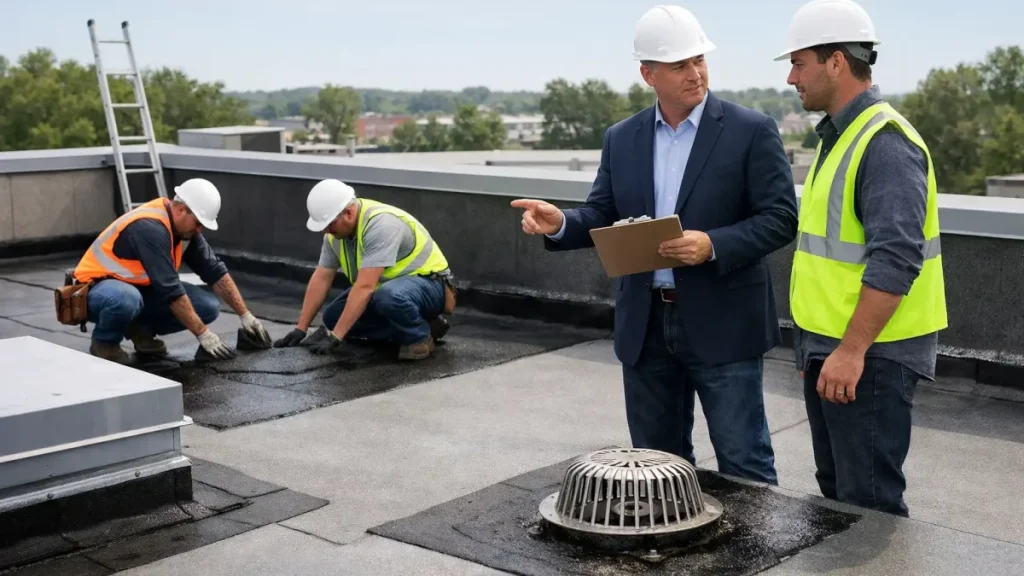
Inspection checklist for property managers and facility managers
You do not need to climb the roof to start documenting a concern. A good inspection request becomes easier when you can describe what is happening and where.
- Note where the leak appears inside the building.
- Record whether it happens during rain, snow melt, or both.
- Look for visible stains, bubbling paint, or wet insulation clues.
- Check whether ponding water remains after storms.
- Review recent rooftop work, equipment service, or tenant activity.
- List any recurring trouble spots near drains, curbs, or seams.
- Capture photos from safe ground-level or interior locations when possible.
If rooftop access is involved, building safety and fall protection must be handled carefully. For general guidance on rooftop access and fall protection, see OSHA: OSHA Fall Protection in Construction. Building safety, code, OSHA, and structural concerns should be reviewed with qualified professionals and official sources.
The takeaway: clear notes and photos help a contractor focus the inspection more quickly.
What a contractor usually looks at before recommending a solution
Before recommending repair, restoration, or replacement, a commercial roofing contractor usually checks the overall condition of the membrane, the attachment at seams and flashings, the slope and drainage pattern, previous repair history, and any areas where the roof has been cut, patched, or repeatedly serviced. A contractor may also look for saturated insulation, trapped moisture, and damage from rooftop traffic or mechanical work.
That review should also consider how the roof is being used. A school roof with scheduled maintenance access is different from a warehouse roof with regular equipment service. A retail center with tenant turnover has different timing needs than a single-tenant building with controlled access.
The best recommendations usually come from a full field review, not from a photo alone.
Maintenance tips after repairs
After SBS or BUR repairs, routine maintenance can help catch small issues before they become larger ones. The goal is not to over-service the roof, but to keep the common trouble spots under observation.
- Keep drains, scuppers, and gutters clear of debris.
- Inspect flashing after major storms and seasonal temperature swings.
- Watch areas with frequent foot traffic or equipment service.
- Document new stains or recurring leaks as soon as they appear.
- Schedule regular professional inspections instead of waiting for interior damage.
- Address small separations or punctures before they spread.
For a structured approach, see Annual Maintenance Programs.
The takeaway: maintenance is most useful when it focuses on drainage, flashings, seams, and traffic points.
When to call a commercial roofing contractor instead of trying temporary fixes
Temporary patches can help with a sudden leak, but they are not a substitute for a proper evaluation when the problem keeps returning. It is usually time to call a commercial roofing contractor when the same area leaks more than once, when ponding water persists, when the roof has several exposed repair spots, or when you cannot tell whether the issue starts at the membrane, flashing, or drainage point.
You should also call a contractor before scheduling major rooftop equipment work, after wind or storm damage, or when a roof area looks soft, unstable, or saturated. If there are questions about code, structural conditions, or OSHA-related access issues, use qualified professionals and official sources before work begins. For contractor background checks and general hiring guidance in New Jersey, the state consumer information resource is available here: New Jersey Division of Consumer Affairs Home Improvement Contractors.
The takeaway: recurring leaks and unsafe conditions are reasons to bring in a professional rather than rely on temporary sealants.
How Aaron Blake Commercial Roofing helps New Jersey properties
Aaron Blake Commercial Roofing is a New Jersey commercial roofing contractor with more than 30 years of experience serving building owners and managers across the state. The company works with industry materials and handles commercial roofing, roof repairs, roof restorations, annual maintenance, and related general construction services. That includes SBS cold process work, built-up roof repair, and related assessments for commercial properties that need practical, local guidance.
For a broader look at service categories, see Commercial Roofing. For service area details, see Areas Serviced. If you are comparing SBS systems with other modified bitumen approaches, you can also review Modified Bitumen Roofing Explained.
Whether the property is in Newark, Jersey City, Elizabeth, Edison, Woodbridge, New Brunswick, Perth Amboy, Plainfield, Paterson, Clifton, Hackensack, Hoboken, Bayonne, Toms River, Trenton, Princeton, Cherry Hill, Camden, Atlantic City, Morristown, Freehold, Red Bank, Paramus, or Secaucus, the goal is the same: identify the roof condition clearly and recommend the next practical step.
The takeaway: local experience matters most when the roof is older, active, and part of a busy commercial property.
Concise takeaways
- SBS cold process and BUR repairs are often used when the roof is still worth preserving but has localized damage or detail failures.
- Leaks commonly start at seams, flashings, penetrations, drains, and ponding areas.
- Repair, restoration, and replacement are different decisions and should be based on the roof’s condition as a whole.
- New Jersey weather, rooftop traffic, and drainage issues can shorten the life of neglected roof details.
- Professional inspection is the best next step when the same leak returns or the damage appears widespread.
FAQ
What is SBS cold process roofing on a commercial building?
SBS cold process roofing uses modified bitumen materials applied without open flame for certain repair or restoration tasks. It is often used on commercial roofs where a contractor wants to address seams, flashing details, or localized damage with a careful, lower-disruption approach.
What is a built-up roof and how is it repaired?
A built-up roof, or BUR, is a layered system made from multiple plies and bitumen, often with gravel or another protective surface. Repairs may include patching damaged areas, reinforcing seams, resealing flashing, or addressing drainage-related wear.
How do I know whether my roof needs patching, restoration, or replacement?
That usually depends on the extent of the wear, the roof’s age, how much ponding water is present, whether the membrane is still generally stable, and how often leaks are recurring. A professional inspection is the best way to sort out those options.
What are the most common leak points on SBS and built-up roofs?
Seams, flashings, drains, skylight curbs, HVAC penetrations, parapet edges, and ponding areas are common leak sources. Those details are often more important than the open field of the roof.
Can ponding water damage SBS or built-up roofing over time?
Yes, standing water can add stress to seams, flashing, and surface materials over time. It can also make smaller defects harder to ignore, so drainage should be reviewed during any inspection.
How often should a commercial roof in New Jersey be inspected?
Many owners schedule inspections at least annually and after major storms, but the right timing depends on roof age, traffic, and the building’s use. Active facilities may benefit from a more regular maintenance plan.
Can Aaron Blake Commercial Roofing help with inspections, repairs, restorations, and maintenance in New Jersey?
Yes. Aaron Blake Commercial Roofing works with commercial roof inspections, repairs, restorations, and annual maintenance across New Jersey, including SBS cold process and built-up roof systems.
How do I schedule a roof inspection or free estimate with Aaron Blake Commercial Roofing?
Call +1 (732) 669-7545, email info@aaronblakecommercialroofing.com, or use the contact page to schedule a commercial roof inspection, repair consultation, restoration review, maintenance program discussion, or free estimate in New Jersey.
Read more
If your New Jersey property has recurring leaks, ponding water, flashing damage, or questions about SBS cold process and built-up roof repair, Aaron Blake Commercial Roofing can help you evaluate the roof and plan the next step. Call +1 (732) 669-7545, email info@aaronblakecommercialroofing.com, or visit /contact-us/ to schedule an inspection or request a free estimate.
For New Jersey commercial roofs, the smartest repair decision usually starts with a careful inspection, clear leak tracing, and a practical look at what the roof can still give you.
Schedule a commercial roof inspection or free estimate
Call Aaron Blake Commercial Roofing at +1 (732) 669-7545 or email info@aaronblakecommercialroofing.com to discuss commercial roof repair, restoration, maintenance, coatings, or exterior property maintenance in New Jersey.